
Data/Analytics

Back-to-school marketing is a mash up of AI tech and value messaging
The 2026 back-to-school marketing season faces the dual challenges of inflation and AI proliferation. Epsilon data shows that 46% of parents plan to use loyalty programs to cut spending, up 7% year-over-year. A Deloitte survey found that parents using digital technologies like AI plan to spend ($737/child) significantly more than those who do not ($381/child). NRF data indicates expected growth in college spending, with brands like Urban Outfitters already using CTV advertising to reach this segment.

The retail marketer’s BFCM readiness playbook
Black Friday and Cyber Monday (BFCM) represent the biggest opportunity and operational test for e-commerce retail brands. Audiense's newly released BFCM Preparation Handbook points out that peak-season success relies not only on traffic and conversion but also on establishing a trustworthy data foundation. This article outlines the handbook's core framework, covering common challenges such as fragmented tracking, attribution conflicts, insight delays, and team misalignment, while providing systematic methods from data diagnosis to real-time action and post-event review.

Microdrama advertising surges as downloads soar: Report
According to a joint report by Mintegral and Insightrackr, micro-drama app downloads reached 1.45 billion in the first half of 2026, up 95.5% year-on-year, far exceeding the 16.6% growth rate of non-gaming apps overall. Advertiser numbers grew by 132%, and creative output rose by 151%. Southeast Asia (518 million) and Latin America (355 million) led downloads, while Europe, the US, and the Middle East together accounted for 17%. Education apps ranked second with a 25.3% year-on-year growth rate, while e-commerce apps were the only category to decline (-4.4%).

Drop the hysteria. Paid search is here to stay.
Despite anxiety over AI and zero-click searches, paid search remains one of the most stable and profitable advertising channels. Data shows its investment share remains at 15%, and high-growth brands allocate 23% of their budgets to search, achieving an ROI of $1.64.
Why smarter DOOH campaigns start with the audience
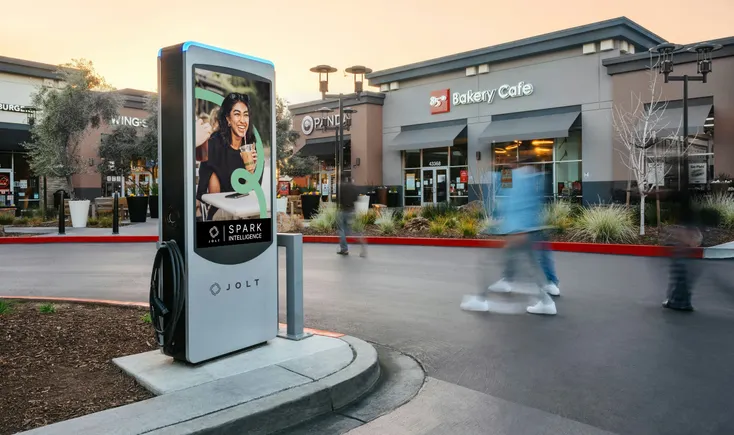
Marketers are under unprecedented pressure to prove the effectiveness of media investments. The Association of National Advertisers estimates that $26.8 billion in global programmatic media spending is lost annually due to redundant supply paths, measurement gaps, and low-quality inventory. Against this backdrop, JOLT launches Spark Intelligence, an audience intelligence platform that shifts digital out-of-home (DOOH) planning from 'location-first' to 'audience-first,' leveraging behavioral, purchase, and mobility data to identify areas with the highest concentration of target audiences and recommend optimal screen combinations. The platform covers over 4,750 digital screens across 65 designated market areas, helping a regional healthcare system achieve an average audience concentration of 66.29% in Atlanta, along with up to an 89% increase in store visitation, a 43% lift in product preference, and a 26% lift in brand consideration.

IAB Updates AI Disclosure Framework as Global Regulations Proliferate
The IAB's updated AI disclosure framework expands on its January guidance, addressing new legal requirements across three continents. It recommends avoiding over-labeling to prevent 'label fatigue,' while providing evidence-based support and specific use cases for disclosure.

Amazon and Nike dominate among Gen Alpha teens
Recent research shows that Amazon and Nike rank high among Gen Alpha teens and their parents, with McDonald's leading in the food sector. Teens have a significant impact on family purchases, and mothers play a greater role in shaping brand preferences than social media.

The AI Search Era: The Visibility Game Between Reddit and YouTube
As AI search changes how users access information, traditional search referral traffic has declined significantly. Reddit and YouTube, leveraging user-generated content, have become important data sources for AI models. Based on July data, this article analyzes the differing roles of these two platforms in AI visibility, their commercial performance, and brand response strategies.

Marketers Face New AI Dilemma: Lack of Quantification of Environmental Footprint
Climate technology and consulting firm 51toCarbonZero released a report indicating that most marketing leaders recognize AI drives up carbon emissions, yet quantification of its environmental impact is severely lacking. The survey covered 200 senior marketing executives in the US and UK, revealing a significant gap between AI environmental governance and overall sustainable development progress.

Measurement Investment Fails to Simplify Advertising Decisions: Report Reveals Gap Between Marketing Effectiveness and Budget Allocation
A report jointly released by Ebiquity and the World Federation of Advertisers (WFA) indicates that marketers invest heavily in measurement, yet the impact of effectiveness outputs on budget decisions is limited. Only 15% of leaders state that marketing effectiveness outputs are the primary basis for budget allocation, while 75% of respondents expect that within the next three years, more than half of budget allocations will be guided by measurement-driven insights. The report emphasizes that investment speed in emerging channels such as retail media and connected TV has outpaced the maturity of measurement infrastructure, and a lack of consensus with CFOs within organizations further constrains the conversion of measurement value.