
Ad Tech

How marketers can navigate machine bias as AI takes over media
Gartner research shows that by 2028, over 70% of global and over 80% of US advertising spending will flow through autonomous platforms deeply influenced by AI. Analyst Eric Schmitt warns that marketers should be cautious in delegating authority to AI, avoid platform algorithms favoring their own interests, and simultaneously limit variables and introduce multi-party evaluations to balance risks and rewards.
Amazon’s ad auction surcharges secretly bilked brands of billions, FTC alleges
The U.S. Federal Trade Commission (FTC) and attorneys general from 22 states have filed a lawsuit against Amazon, alleging secret surcharges in its search ad auctions that lasted over seven years, impacted more than 1 million brands, and brought Amazon tens of billions of dollars in revenue. Internal documents show that Amazon executives actively concealed this behavior, fearing that disclosure would cause "irreparable harm to advertiser trust." Amazon denies the allegations, stating that such practices are common in the industry, and emphasizes that advertisers adjust their bids based on actual performance.
Sociable: Meta removes option to exclude ad placements
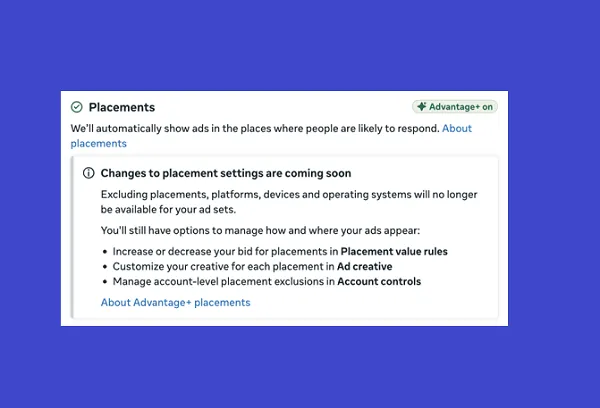
Meta is gradually eliminating advertiser control over ad placements and platforms to advance its vision of fully automated AI advertising. Industry expert Jon Loomer shared screenshots of the relevant notification, but no specific timeline was disclosed.

ANA cautions marketers against overreliance on retail media data
The ANA has issued its first call for a unified retail media measurement framework, highlighting the channel's reliance on first-party data yet lack of comparable metrics across networks. The trade body emphasizes the need for more independent third-party accreditation and warns against overreliance on self-reported data, especially as ad-tech M&A reduces the pool of neutral measurement vendors.

Nielsen acquires DoubleVerify to link ad verification, audience measurement
Nielsen Holdings will acquire DoubleVerify at an enterprise value of approximately $2.15 billion, and DoubleVerify will continue to operate independently under its original brand. The combined company will cover an advertising segment valued at $240 billion. The transaction is expected to close in the first quarter of 2027, subject to regulatory and shareholder approvals.

As AI reshapes brand visibility, IAB attempts to clean up measurement
As AI reshapes brand visibility, the IAB introduces standardized guidelines covering four "P" principles and a two-tier measurement system to help marketers and publishers measure effectively in the AI era.
Amazon’s live sports land grab helps boost ad segment to $19.8B in Q2
Amazon's Q2 ad revenue reached $19.8 billion, up 26% year-over-year. Its multi-sport category advertising strategy delivered 2.3x deduplicated reach, with Prime Video sports rights (NFL, NBA, WNBA, NASCAR) fully sold out.
Snapchat shores up lead gen ads with new HubSpot integration
Snapchat announced a new integration with HubSpot aimed at helping brands more efficiently reach Gen Z and Millennial users. The partnership allows advertisers to quickly create native lead ads on Snapchat, automatically import leads into HubSpot's sales pipeline via API, and send back conversion events through the Conversions API to optimize ad performance measurement. Snapchat reports that its native lead ads have seen a 77% year-over-year increase in click-through rate and a 26% decrease in cost per lead.
Sociable: Will Meta’s massive AI bet pay off?
Meta has invested tens of billions of dollars in AI, but given its past record of failures in self-developed innovation and the uncertainty of AI commercialization prospects, the success of this big gamble is highly questioned.
Google’s ads biz gets boost from World Cup hype, Gemini improvements
Alphabet's Q2 earnings show Google's ad revenue up 14% year-over-year to $81.6 billion, with total revenue growing 24% to $119.8 billion. Gemini AI plays a key role in search and shopping ads, and YouTube attracted over 1.7 billion global viewers due to World Cup content. The company also raised its 2026 capital expenditure guidance to $195-205 billion.