
The Boundaries of Nostalgic Marketing: How Brands Look Back Without Being 'Dried Out'
Following greenwashing and rainbow washing, nostalgia washing has become a new risk for brands. In 2024, many brands attempted to attract consumers with nostalgic elements, but most failed to establish genuine emotional connections. Experts point out that successful nostalgic marketing should be based on a brand's authentic history and values, rather than blindly chasing trends. By analyzing the perspectives of experts from agencies such as Lippincott and Buttermilk, as well as cases like Levi's and Chili's, this article explores how brands can maintain sincerity and differentiation amid the nostalgia wave.
After "greenwashing" and "rainbow-washing," now comes "nostalgia-washing," which can be just as damaging to brands.
In recent years, marketing tactics that leverage nostalgia to attract consumers have been widely adopted: initially as a "placebo" to ease pandemic-related consumer anxiety, and later as a "safe haven" for people escaping global conflicts, ecological woes, and political divisions (culminating in the November presidential election). However, as marketers continue to rely on this strategy, 2024 was filled with campaigns that tried to evoke collective memories but failed to create meaningful connections.
"Nostalgia is most interesting and effective when it clearly taps into something authentic about the brand and its history, rather than being nostalgic for nostalgia's sake or blindly following trends," said Eric Tsytsylin, partner at brand strategy firm Lippincott. "If you need to write a long essay to explain the relevance to the business and brand, that's probably not a good sign."
Riding the nostalgia cycle
Nostalgia has long been a powerful tool for marketers to build emotional connections with consumers. Just look back at the season one finale of "Mad Men" (a show that itself is a product of nostalgia), where Don Draper tapped into the pain of old wounds while pitching a slide projector. Or how the 80s-set retro series "Stranger Things" sparked a wave ofnostalgic brand collaborations.
Last year may have represented thehigh-water mark of nostalgia marketing—from the "Barbie" craze to the success of Grimace's birthday celebration. While some of the best marketing in 2024 also used nostalgia, the past 12 months were equally filled with boy bands, flip phones, and callbacks to old ads and slogans. Too often, it felt like too many marketers were working from the same brief, and only the savviest managed to stand out.
Part of the problem is that nostalgia marketing in recent years has spanned multiple eras rather than focusing on one, such as how the early 2000s nostalgia around all things 80s seemed to dominate marketing efforts back then.
"We've gone through every decade in two years, whereas it used to take much longer to move through these cycles," said Amber Ledrin, senior creative strategist at Buttermilk. "Now we're reaching a saturation point where everything is happening at once."
This sense of "everything happening at once" largely stems from changes in the media landscape, social media, and the proliferation of content. This compression means brands need to be more attuned to culture through social listening and be careful not to chase the shiniest thing on social media.
"It requires more intentionality and prioritization so as not to dilute the brand or spread efforts too thin," Tsytsylin said. "I bet in a few months, calling something 'demure'calling something 'demure'will be seen as nostalgic."
As with any cultural marketing, authenticity is key, especially when targeting Gen Z. Manisha Mehta, senior PR and communications manager at digital asset management company Bynder, believes that to drive genuine emotional connections with consumers, brands must serve nostalgia to brand values and narratives, not just as decoration.
"Nostalgia works best when it's data-driven and insight-led. For example, consumer sentiment analysis can provide rich insights into which eras or specific cultural references resonate most with target groups, enabling brands to personalize nostalgia in relevant and meaningful ways," Mehta said in an email comment. "Ultimately, brands that treat nostalgia as one layer in an integrated storytelling strategy, rather than the entire message, can reinforce brand stories in fresh, relatable, and purpose-driven ways."
In 2024, marketers includingHeineken、Frito-LayandUSCellularlaunched campaigns centered on featureless flip phones (or "dumb phones"), which evoked nostalgia not only for old technology but also for the state of human connection these devices represented at the time.
"Nostalgia might be the creative entry point, but it actually touches on sociality and product truth...about unhappiness, loneliness, depression, and our obsession and addiction to devices," Tsytsylin said of the dumb phone ads. "There's an interesting overlap between positive, optimistic nostalgia and addressing real problems of today."
Playing the "inside joke"
Nostalgia in 2024 advertising wasn't limited to cultural symbols of the past: many brands also looked back at their own ads and slogans for inspiration. Sprite and Gatorade updated "Obey Your Thirst" and "Is It In You?" respectively, reimagining classic ads with modern spokespeople. Brisk brought back itsclaymation ads, Doritos will againtake a swing at the Super Bowl, and McDonald's—no stranger to brand nostalgia—paid tribute to past collaborations。
"Sometimes these moves are a bit like 'inside jokes,' but when they have multiple layers of meaning and authenticity, they can be very powerful," Tsytsylin said.
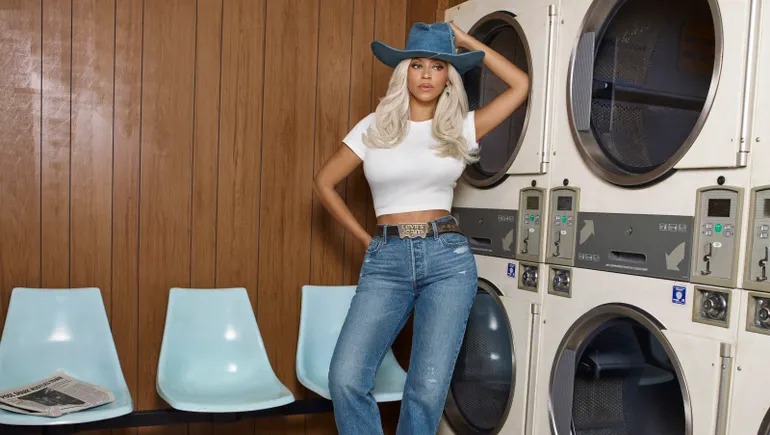
A prime example of brand nostalgia is Beyoncé's recent ad with Levi's, which reimagined the famous 1985 "Launderette" commercial. The clothing company's partnership with the global superstar seemed almost destined, given that her March country-tinged album "Cowboy Carter" included the song "Levii's Jeans." But experts are divided on the ad's use of nostalgia.
"The Levi's 'Launderette' ad with Beyoncé is a great example of a brand using its marketing archive to connect nostalgia with product truth and cultural moments," said Tanner Graham, CEO of agency General Idea. "With the recent trend of denim and country-western culture, it was a good time to connect all those dots."
For advertising professionals—and possibly consumers—who aren't old enough to remember the original ad, those dots are less clear. In the original, a male model strips down to his underwear while waiting for his jeans to wash.
"When I first saw the Beyoncé and Levi's collaboration, I thought, 'Oh, that's great, because of Cowboy Carter,'" said Ledrin of Buttermilk. "The ad, which I probably never saw, never crossed my mind, so I don't think they captured that nostalgia angle for anyone other than themselves."
The ad may resonate more with those who remember the original, such as Geoff Edwards, creative managing director at Gale and president of the 2024 Cannes Lions Entertainment jury, who started working at ad agencies in the early 1990s. But nostalgia is subjective.
"Depending on the target audience, is it more about giving me a remix moment, or is it about Gen Z seeing it and saying 'Oh, I like that' and then extending that experience?" Edwards said.
Riding the wave without being overwhelmed
Effectively using nostalgia requires authentic brand connections and ideally not looking like it's chasing a marketing trend. This "me-too" marketing was evident in the boy band obsession, a wave thatbegan last yearand continued into 2024, with brands includingCoca-Cola、Dunkin'andBumble Beereuniting members of 90s and 2000s groups and reimagining their songs.
"Strategically, brands can avoid the 'nostalgia wave' by focusing on unique brand voice and value propositions. An insight-based approach, using predictive analytics, can help anticipate emerging nostalgia trends, allowing brands to stay ahead of competitors while remaining relevant," Bynder's Mehta said in an email comment.

Even within the nostalgia wave, brands have the opportunity to differentiate by being highly specific about the cultural moments they reactivate. For example, instead of broadly focusing on the 80s, brands can target the arcade game subculture of that decade, asChili's excellent BurgerTime addid.
"Rather than broadly referencing an era, brands should consider more segmented, culturally rich elements that hold meaning for their audience," Mehta said. "This specificity helps build brand affinity and positions the brand as an authentic voice in the nostalgia space."
As with any marketing strategy, brands must use data-driven insights and be honest with themselves about brand values and identity, while focusing on the intersection of authenticity, audience, and cultural moments, and what truly matters to customers.
"Finding consistency can be hard—it is, and I think it should be," said Lippincott's Tsytsylin. "I think it should be very intentional and infrequent, but when you can hit all those intersections, nostalgia can be truly powerful."