
World Cup Tests Marketers' Ability to Prove Sponsorship Value
The 2026 FIFA World Cup is seen as one of the biggest brand marketing opportunities in recent years, but it will also test a more fundamental question: whether marketers can still win attention at scale and prove the value of sponsorship. Gartner predicts that by 2028, 90% of CMOs investing in sports sponsorships will struggle to demonstrate return on investment due to undefined success criteria. This article points out that sponsorship strategies should not be driven solely by exposure metrics but should be planned and measured around three distinct goals: visibility, connection, and trust.
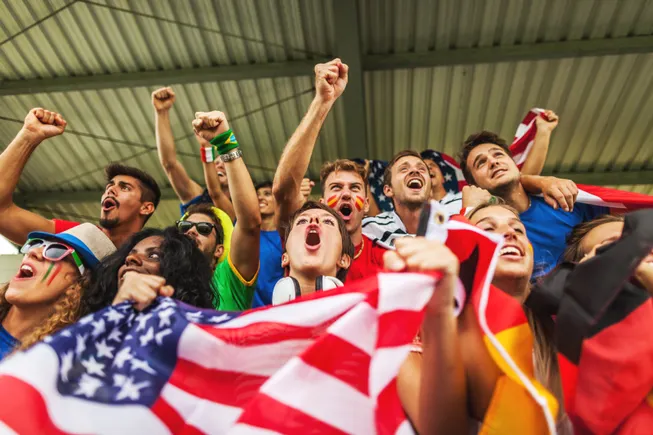
The 2026 FIFA World Cup will be one of the biggest brand marketing opportunities in years. It will also test a more fundamental question: whether marketers can still win attention at scale and prove the value of sponsorship.
For years, the industry has leaned on digital channels and personalization to drive relevance. The assumption was that more precise targeting would lead to better results. That premise is beginning to crack. Marketing budgets remain heavily concentrated in digital channels, even as consumers have become increasingly adept at avoiding ads—skipping, blocking, or simply tuning them out. The result is a widening gap between where brands invest and where attention actually lies.
AI-driven personalization is not enough to close this gap. In many cases, it has made the experience worse. When messages feel repetitive or disconnected from context, they erode trust and trigger user disengagement. Precision has improved, but impact has not kept pace. The challenge now is no longer targeting, but visibility and presence—specifically, showing up in the moments where people are already invested.
Why the World Cup changes the attention equation
Unlike the fragmented digital landscape, the World Cup concentrates attention. It brings together emotion, ritual, and shared context over an extended period. These conditions are increasingly hard to replicate in today's media landscape, creating opportunities for brands to integrate naturally rather than interrupt.
Sponsorship can leverage this shift, but only with a different approach. Many brands still treat major events primarily as exposure opportunities, focusing on logo presence, reach, and impressions. These elements remain important, but they are no longer enough to constitute an advantage. When every brand shows up the same way, visibility becomes a baseline rather than a differentiator.
Campaigns that truly stand out do more. They contribute to the experience itself—whether through fan engagement, cultural participation, or localized activation. They give audiences a reason to interact with the brand, not just notice it. Joining the fan community rather than disrupting its experience is what separates effective sponsorship from mediocre sponsorship.
Most sponsorship strategies start from the wrong place
Sponsorship places brands in contexts where audiences are already paying attention. At the same time, it requires significant investment, and expectations for measurable impact are rising. Gartner predicts that by 2028, 90% of CMOs investing in sports sponsorship will struggle to prove ROI due to a failure to clearly define success criteria.
This gap often begins at the planning stage. Too many organizations default to impressions as the primary metric because it is easy to report and compare. Impressions prove reach, but they say almost nothing about whether sponsorship changed behavior or perception. Without a clear definition of outcomes, even effective programs can appear hard to justify.
A more effective approach starts with clarity. Most sponsorships aim for some combination of three outcomes: visibility, connection, and trust. These concepts are not new, but they are often conflated rather than treated as distinct objectives requiring different strategies and measurement methods.
Visibility remains foundational. The World Cup provides scale through broadcasts, social platforms, media coverage, and on-site presence. This exposure reinforces awareness, especially at a global level. It is also the easiest outcome to measure, yet the least likely to justify the investment on its own.
Connection is where sponsorship begins to differentiate. Rather than pushing messages into crowded feeds, brands can align with how fans already engage—whether through live experiences, creator collaborations, retail tie-ins, or localized programming. The goal is to participate in the experience, not surround it with messages.
Trust takes longer to build, but it often gives sponsorship its lasting commercial value. Shared experiences carry more weight than typical brand interactions, especially in a media environment increasingly shaped by automation. Brands that engage consistently and credibly can strengthen their relationship with audiences in ways that extend beyond the event itself.
If you can't define value, you can't prove ROI
Not every brand needs to prioritize all three outcomes equally. Some will focus on reach, others on engagement or long-term brand perception. The key is to clarify priorities in advance and align activation and measurement accordingly. Without this clarity, it will be difficult to interpret results afterward.
The structure of the World Cup also expands the ways brands can participate. Official sponsorship is just one option, and often not the most flexible. Many brands will gain greater impact through local activations, creator ecosystems, retail experiences, or partnerships targeting specific audiences and communities. These approaches can feel more authentic and allow brands to move faster.
However, they also come with risks. The sponsorship environment is crowded, visibility can dilute quickly, and one-off moments fade without reinforcement. Partnerships introduce reputational considerations, and execution quality directly affects outcomes. These are not new challenges, but they are becoming more prominent as budgets tighten and scrutiny intensifies.
Measurement needs to reflect this complexity. Evaluating sponsorship solely on performance during the event misses much of where value is created. Pre-event momentum, in-event engagement, and post-event brand impact should all be considered. These metrics are harder to quantify than impressions, but they are far more closely tied to business outcomes.
This is where many organizations still lag. They recognize that sponsorship can create meaningful impact, but they have not yet built frameworks to prove it with confidence.
The pressure on CMOs makes this gap increasingly hard to ignore. Leaders are asked to deliver growth while navigating rising costs, privacy constraints, and traditional ad fatigue. Meanwhile, consumers still respond to shared and emotionally authentic experiences. The World Cup sits at this intersection.
Scale alone will not determine which brands win. The brands that stand out will define the role they want to play, activate thoughtfully, and measure results rigorously. They will treat sponsorship as a way to build visibility, connection, and trust, not merely extend reach.
As attention becomes harder to win, the successful brands will be those that can prove their sponsorship creates value beyond visibility itself.