
Inclusive marketing is 'paralyzed': How brands can break the deadlock
At Advertising Week in New York, marketers admitted that the industry is 'paralyzed' in inclusive marketing. Over the past five years, DEI commitments have experienced a rollercoaster from highs to retreats, with the Trump administration's anti-DEI movement intensifying brand pullbacks. However, diverse audiences represent $6.8 trillion in purchasing power, and 75% of consumers say inclusivity influences their purchasing decisions. Experts suggest that brands should start with data, maintain consistency, and deeply understand the complexity of identity to win consumer loyalty during the critical Q4 period.
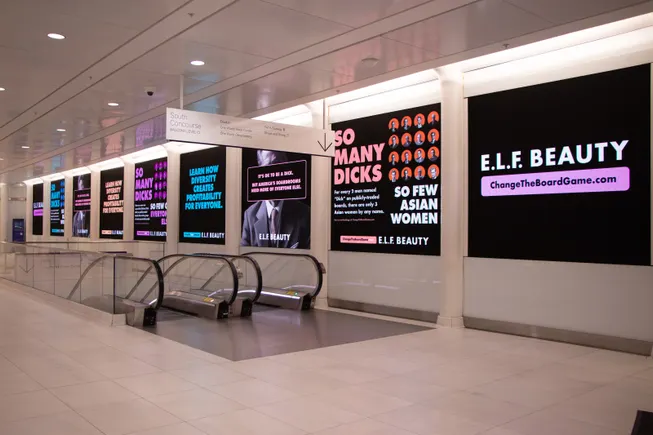
At Advertising Week New York earlier this month, a sobering consensus emerged across several diversity-focused discussions: marketers conveyed that the industry still has a long way to go in achieving meaningful representation, not just in creative output but across all levels of business.
Over the past five years, inclusive marketing strategies have experienced a rollercoaster of ups and downs. In 2020, tragic events including the murder of George Floyd fueled a powerful racial justice movement, prompting major corporations to make larger diversity, equity, and inclusion (DEI) commitments and add Chief Diversity Officer positions. However, many of these positions have since been eliminated, and DEI strategies have faced widespread rollbacks. Meanwhile, the Trump administration is aggressively pushing an anti-DEI movement.
The shifting social and political climate has left brands uncertain and consumers unsure about where to place their loyalty, explained God-is Rivera, Chief Strategy Officer at Burrell Communications Group Worldwide. The company describes itself as the first Black-owned agency network.
"I think a lot of brands right now—not all—are in a state of paralysis," Rivera said. "What we're seeing is that many people have never thought about what inclusivity means to them, so they go with the flow and adopt different definitions... Now we're at this point where people are almost trying to stand still and figure out what to do next."
Although diverse audiences have proven to be a growth opportunity for marketers, efforts to drive representation appear to be slipping. Brands hoping to advance this work can take multiple approaches, from expanding their understanding of identity to prioritizing consistency and addressing unconscious bias. This work could become more urgent as the critical year-end shopping season approaches, when consumer expectations for inclusivity are expected to intensify.

Industry Stagnation
Inclusive advertising still has a long way to go. According to the "2024 Global Advertising Representation Report" released by XR, more than half (53%) of the global industry falls below the global average in content representation. The report, developed by tech company XR in partnership with The Female Quotient, used artificial intelligence to analyze nearly one million ads across 35 industries. Results showed that only 12% of talent in ads have dark skin, 6% of screen time includes older people, and 15% of screen time is given to people with larger body types.
Meanwhile, according to Samba TV's "2025 State of Diversity on TV Report," the presence of non-white talent in popular TV shows decreased 5% year-over-year to 42% overall, and Hispanic talent is underrepresented both on screen and in advertising targeted at Hispanic households. Not to mention that corporate DEI rollbacks have led to thousands of job losses and have had a significant impact on the advertising industry.
"I think what we're seeing is a feeling of abandonment. People and groups seem to be thrown overboard, and that's showing up in what we see from creative," Rivera said.
Companies like Amazon, Target, and Walmart have scaled back DEI efforts. Meanwhile, brands like Dunkin' and American Eagle have faced boycotts over recent ads that critics say contained dog whistles alluding to long-discredited eugenics theories. Rivera believes brands are becoming more confident in projecting values that may exclude or harm diverse groups, and the business impact may gradually become apparent.
"Even if it feels good right now, even if it feels trendy or effective, I don't think it's the wisest long-term strategy—but I'd rather brands be their authentic selves," Rivera said.
"The problem is that brands view people as expendable. This isn't just a strategy for you—this is my life."
— God-is Rivera, Chief Strategy Officer at Burrell Communications Group Worldwide
Katie Thomas, who leads the Kearney Consumer Institute, explained that several factors can explain brands' silence on DEI issues, including the Trump administration's stance, which makes many brands fear punishment. Brands are also navigating increasing affordability demands amid economic uncertainty, which may force them to reprioritize.
"Right now, consumers are most worried about their financial situation, so we're seeing that, not specifically regarding DEI, the priority of any values is slowly declining because people feel pressured by the price-value equation," Thomas said.
In terms of balancing affordability demands, according to Kearney's Q2 2025 report, 80% of consumers believe shopping based on values is more expensive. Additionally, 79% of consumers believe that brands expressing values is less important than meeting expectations on quality. Thomas added that this doesn't mean values like inclusivity aren't important currently, especially in building long-term loyalty.
"Consumers have more choices than ever, and they can indeed choose to shop by their values, and when they have the financial means, they will do so," Thomas said.
Rivera believes another reason for the rollback is that brands often treat values like inclusivity as a passing fad rather than defining and sticking to a set of core values. She urges brands to take responsibility and think about inclusivity on a human level first, rather than viewing it as a strategy.
"The problem is that brands view people as expendable... This isn't just a strategy for you—this is my life. This is the life my daughter can have, the life my grandmother was denied, the life my mother is caught in between—this is our lives. It changes the trajectory of health outcomes, self-esteem, and job opportunities," Rivera said. "If brands speak up collectively now, they can withstand far more impact than the individuals being thrown overboard."
"We Will Be Flattened Again"
The retreat in advertising industry workforce diversity is particularly noticeable because true equality was never achieved. According to the Association of National Advertisers, diversity in the marketing industry declined for the first time in years in 2023, with people of color comprising only 30.8% of the marketing industry, down from a record high of 32.3% in 2022.
"As a Black woman, seeing headlines like '300,000 Black women left the workforce' is hard. It's heartbreaking because when we consider pushing the boundaries of inclusivity, if we lose the people who can build culture because of their connection to communities, we will be flattened again, and then we'll just go back to delivering a single type of message to people," said Danisha Lomax, Chief Community Connection Officer at Digitas North America.
While women have gained more representation in the advertising industry, this often stalls at the leadership level, explained Asha Shivaji, CEO and co-founder of the SeeMe Index. The company uses AI to measure and benchmark brands' inclusivity efforts. She continued that organizations need to reflect the face of the world at multiple levels, from age and gender to education level and where someone grew up.
"We know diverse thinking leads to the best outcomes," Shivaji said, who moderated a panel at Advertising Week New York about the success stories of inclusivity efforts at E.l.f. Beauty and MAC Cosmetics. "Think about our country—no matter how you feel, we are becoming more diverse. By 2045, we will be a majority-minority country. I think the concept of mass marketing is slowly dying because there is no longer a mass market."

Marketing with a Diverse Mindset
Data shows there is opportunity in building inclusive marketing strategies. The fastest-growing consumer markets are diverse growth audiences, who represent $6.8 trillion in purchasing power, according to a panel at Advertising Week New York.
According to Kantar, three-quarters of consumers say a brand's diversity and inclusion reputation influences their purchasing decisions. Shivaji said consumers now want brands to represent their values, especially when they don't see that representation elsewhere in the world.
"Brands have a unique opportunity to create a safe harbor in the current environment," Shivaji said. "Fenty Beauty launched during the previous Trump administration, which was also a time when people were seeking more representation and products that resonated with them."
For brands unsure where to start, Shivaji recommends clearly defining the groups they want to target rather than trying to be everything to everyone. Then, brands need to develop a strategy around how to maintain consistent messaging across all consumer touchpoints.
"Consumers now really notice when a brand shows up and disappears around a certain holiday or moment, and they think: Where are they the rest of the year?" she said.
"I often say, when we look at the data, if you're looking for a woman over 55, with dark skin, and plus-size, she doesn't exist in advertising."
— Asha Shivaji, CEO and co-founder of SeeMe Index
Some marketers have faced backlash for failing to stick with such initiatives, including Target, which has been the subject of consumer boycotts for months due to scaling back its DEI efforts.
From a business perspective, this rollback is also hard to understand: After Target CEO Brian Cornell committed to increasing Black employee representation and increasing partnerships with Black-owned businesses, the company saw record growth in 2020, with comparable sales rising 12.7% in 2021. Today, the retailer is still struggling with declining sales and low consumer sentiment.
Although some may be intimidated by the current climate to take a stand, Shivaji urges companies to look at the data.
"A lot of what we do at SeeMe Index is bring data and say, 'Look, when you start representing this group more in your ads, in your targeting efforts, and in the products you create for them, your penetration also goes up.' It's not an accident; it's a direct relationship," Shivaji said.
Data also helps identify gaps. For example, Shivaji said, people with dark skin get only one-third of the screen time in ads compared to those with lighter skin, even when brands hire diverse talent. Brands also struggle to expand the range of skin tones, often choosing one or two people to represent an entire group, or failing to look beyond gender and race when considering identity.
"When we think of women, there's a whole spectrum of different dimensions of diversity," she said. "I often say, when we look at the data, if you're looking for a woman over 55, with dark skin, and plus-size, she doesn't exist in advertising."
However, data also has limitations, especially in understanding individual identity, Rivera explained. To resonate with specific audiences, brands should be willing to listen and immerse themselves in someone's identity, going beyond surface levels.
"If I showed you my husband's resume, every data point would be right, but nothing would tell you why I love him so much. So, you can get the data, but you have to immerse yourself in the environments around these people," Rivera said.
Digitas' Lomax explained that creators can be an important tool for brands to authentically engage with diverse audiences, praising creators' ability to build loyal communities. According to eMarketer, US brands are expected to spend $13.7 billion on influencer marketing by 2027, up from $10.5 billion this year. However, creator partnerships should be carefully considered to ensure alignment with a brand's broader strategy, as seen in the wave of conservative backlash following Bud Light's partnership with transgender influencer Dylan Mulvaney.
"I love to say that creators are the media plan—what I mean by that is they are the ones who can break through," Lomax said.
Predicting the Future
For the rest of the year, brands may face greater performance pressure as the key holiday season arrives and the impacts of tariffs and supply chain issues persist. Lomax explained that in such a sales-driven period, marketers who send messages—as long as they are consistent and authentic—are more likely to stand out and build genuine loyalty than those who play it safe.
"Brands can't exist without people. If you only think about your own personal experience right now, how you want to receive messages, how you want people to interact with you—the same considerations need to enter the boardroom where marketing decisions are made," Lomax said.
While consumers hold the ultimate power of the purse, Rivera expects shoppers to exert greater control during Q4 and be more selective about where they spend. Consumers may ultimately force brands to respond to their calls for inclusivity in ways that are clearer and more reflective of today's world.
"What we're seeing is people filled with emotion inside, they want to see themselves, they want to see evolution," Rivera said. "You can try to walk a tightrope for a long time, but I think we'll see a wave of people erupt: 'I'm fed up, I'm not buying this, I'm not doing that'... I hope Q4 becomes a climax of the people's voice expressing what they want to see and shaking us a bit out of this paralysis we've been seeing."
As marketing executives and consumers alike navigate this particularly difficult period, Rivera emphasized the importance of focusing on the most vulnerable groups.
"As a Black female executive at a Black-owned agency network, I want to say to Black people, Brown people, the LGBTQ+ community, people with disabilities, Indigenous people, and the most marginalized: I know how hard this is," Rivera said. "I see you. Your voices still matter."