
How CMOs Should Tackle Challenges in the First Half of 2025 - Actions Required in the Second Half
In the first half of 2025, chief marketing officers (CMOs) navigated a challenging landscape marked by uncertainty over TikTok's future in the U.S., antitrust challenges against Alphabet and Meta, agency consolidation, AI moving from concept to application, and ongoing global conflicts. Tariffs and trade wars heightened economic uncertainty, leading to tighter budgets, shorter planning cycles, and a renewed focus on performance marketing. Industry insiders such as Gartner expert Ewan McIntyre and Quad CMO Josh Golden believe that in the second half of the year, CMOs must make critical decisions to balance brand building with short-term performance and clarify AI's role within their organizations.
To borrow a phrase from Thomas Paine, these are the times that try marketers' souls.
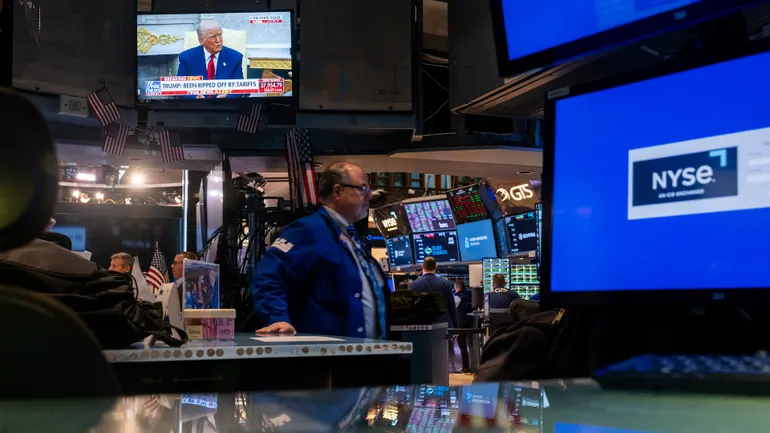
This year, CMOs face a series of uncertainties: TikTok's future in the U.S. hangs in the balance, Alphabet and Meta face antitrust challenges, agency holding companies continue to consolidate, AI moves from hype to reality, and endless global conflicts. Not to mention tariffs and the ongoing global trade war—as of this writing, the U.S. and the European Union are stillnegotiating, with the July 9 trade agreement deadline fast approaching. President Trump has previously said on the matter, "We can do whatever we want”。
Clearly, the president can do whatever he wants, but CMOs cannot. Both consumers and chief financial officers (CFOs) are feeling the negative sentiment, forcing marketers to confront tighter budgets, shorter campaign planning cycles, a pendulum swing from brand building to performance marketing, and the growing urgency to figure out how AI will reshape their operating models.
"When you're driving on the highway and someone taps the brakes, and then everyone taps the brakes—that's what's happening," said Josh Golden, CMO of marketing experience company Quad, speaking about the current economic climate. "When everyone is waiting for the election results, and then tariffs come in, that uncertainty creates a ripple effect."
These ripple effects have already impacted marketers' bottom lines. According toGartner data, many marketing teams face flat budgets in 2025, and could face cuts if the macroeconomic situation does not improve. While a wait-and-see strategy may have held up in the first half, that will no longer be the case as they prepare for the critical back-to-school and holiday seasons.
"This vortex of uncertainty left CMOs in a holding pattern earlier this year," said Ewan McIntyre, vice president analyst and research lead for Gartner's marketing practice. "In the first half, we saw a group of anxious CMOs who didn't know where to turn, but as we move into the second half, they really do have to make some choices."

Negative sentiment spreads
Gartner's analysis of CFO data suggests that budget cuts are already in the works this year, regardless of how the tariff issue ultimately evolves. Even with just the possibility of negative economic trends, CFOs have already begun pushing for cost optimization and layoffs.
"Over time, this becomes pure emotion. Unfortunately, emotion has a very large influence on some of the major decisions companies make," McIntyre said.
CMOs are already feeling these negative sentiments. Expectations of future cuts have prompted marketers to prepare by adjusting budgets—paid media now accounts for 30.6% of total marketing spend, up from 27.9%; 39% of CMOs plan to cut agency spending and internal labor costs in the coming year.
"There is definitely a sense that CMOs are placing bets, they are deprioritizing other areas of their portfolio and betting on media investment, believing this will help them achieve their goals in a turbulent environment," McIntyre said.
Maybe this is the new normal, and if we recognize that, we can go with the flow and turn it into a competitive advantage.

Lisa Cole
CMO of 2X
The willingness to cut agency spending may favor larger agencies at the expense of specialized boutiques, as marketers seek to minimize fee-based costs. Internal teams may face the same issue. Cuts to either cost center could have unintended consequences.
"CMOs need to be careful," McIntyre explained. "If they make the wrong choices, whether in terms of internal staff or valuable and specialized agency relationships, it could lead to a decline in productivity."
The lesson from the first half of 2025 may be that the era of planning marketing strategies on an annual or semi-annual cycle is over. Marketers would be better off thinking in 90-day cycles to avoid disruptions from the constant stream of crises.
"Maybe this is the new normal, and if we recognize that, we can go with the flow and turn it into a competitive advantage," said Lisa Cole, CMO of B2B marketing company 2X.
The pendulum swings again
Tight budgets for marketers are nothing new—from the 2008 financial crisis to the pandemic, and through the recent period of uncertainty. While the challenges differ, the response is often the same: cash-strapped CMOs, to appease CFOs, often cut brand building investments and instead pursue the more immediate returns of performance marketing.
"This is very predictable behavior. We've seen it in previous periods of economic uncertainty," McIntyre said. "There is clear harm in doing so—if performance investment is good, but we don't have enough brand awareness to guide consumers to search scenarios, then we are harming growth prospects."
Last year,the pendulum swung back toward brand building, but now it seems to be swinging in the opposite direction—which poses significant risks for marketers. Chris Kelly, CEO of brand analytics platform Upwave, uses an apple orchard analogy to illustrate the problem: if you stop planting seeds for six months.
"Of course, in the short term you save on seed costs and time, so your performance numbers may look better, but... you can't keep not planting seeds," Kelly said. "We have to plant seeds this year, or we'll reap the consequences in 2026."
This is a painful lesson that Nike and Starbucks must learn... to recognize that if you focus too much on quarterly results, over time you lose the essence of the brand.
Josh Golden
CMO of Quad
In times of economic uncertainty, the trade-offs under limited budgets are more severe. But according to Upwave data, marketers who view brand building as a "nice-to-have" rather than "essential" will see negative impacts within the coming year, if not sooner. Savvy CMOs will seek to balance the needs of both, while remaining prudent in measurement and attribution.
"The theme of accountability for spending is definitely intensifying... and there is an increase in measurement discussions based on different types of investment (upper funnel vs. lower funnel)," Kelly said.
This year, major brands including Nike and Starbucks, after years of focusing on performance marketing and channels like digital and mobile, are reinvesting in brand building. Nike has returned to the sensational advertising that built its brand, such as itsbest Super Bowl ad; Starbucks also launched aback-to-roots advertising campaignduring the Super Bowl. Results so far are mixed. Nike suffered itsbiggest financial shock since its transformationlast quarter, while Starbucks says its broad marketing iswinning over customers。
"This is a painful lesson that Nike and Starbucks must learn, and frankly, other brands must also recognize that if you focus too much on quarterly results, over time you lose the essence of the brand," said Quad's Golden. "My goal in marketing has always been to balance brand building and demand generation. It's a dual track; you can't say this year we're only driving demand, or you'll fail."

The root of all problems and the solution?
When discussing tight marketing budgets, the elephant in the room is the impact of AI. AI has evolved from the hype phase triggered by ChatGPT's release in November 2022 to become a significant engine driving the advertising industry (and parts of the economic landscape), and its share continues to grow.
Nearly half (49%) of CMOs surveyed by Gartner sayAI has helped them improve time efficiency, and 40% of CMOs rank AI among the top three factors for improving cost efficiency. These figures suggest significant positive sentiment about AI's ability to boost marketing productivity, but they may also lead other C-suite executives to overestimate AI's capabilities.
"AI is helping solve some long-standing bottlenecks in marketing, which is good," McIntyre said. "I think the challenge we'll face in the second half is that senior business executives from non-marketing backgrounds will pressure all business leaders to start cutting headcount and costs."
According to Upwave's Kelly, the main use cases for AI in marketing include creative generation, content validation, ad operations, and insights and reporting generation. He said marketers are still trying to discern which parts of AI are real and which are "bullshit."
"The common thread seems to be tasks that have historically been highly dependent on human labor," the executive said.
This doesn't necessarily mean brands or agencies will cut staff. Large language models may not be able to produce TV commercials, but they can help creatives draft ten ads in the time it used to take to produce one—that's real value that can be passed on to clients. Generative AI can also handle much of the labor-intensive measurement work, handing off the task of summarizing reports to computers.
The key to integrating AI into marketing functions in the second half and beyond lies in clarifying the brand's operating model and where AI fits within it. 2X's Cole explained that one way to determine AI use is to adopt a three-tier framework.
The first tier is the source of competitive advantage for marketers: positioning, messaging, and strategic work, which cannot be outsourced or automated. The second tier consists of functions that are not part of the company's value proposition but still require best practices, possibly including email, social media, and search discovery; this tier can be outsourced. The final tier consists of tasks that can be automated with AI, from creative versioning to campaign optimization to research.
"If you sort out these three tiers... then you can look at the budget you have," Cole explained. "How many people do I really need? What roles do I truly need? Which partners do I need for the outsourced parts? What tools and training does AI need?"