
With TikTok Ban Uncertain, How Marketers Can Stay Agile
As the U.S. Supreme Court prepares to rule on the TikTok ban, the marketing industry faces the major challenge of reallocating advertising budgets. This article outlines the timeline of the ban, potential beneficiary platforms, the impact of changes in Meta's content moderation policies, and the diversified strategies brands should adopt amid uncertainty.
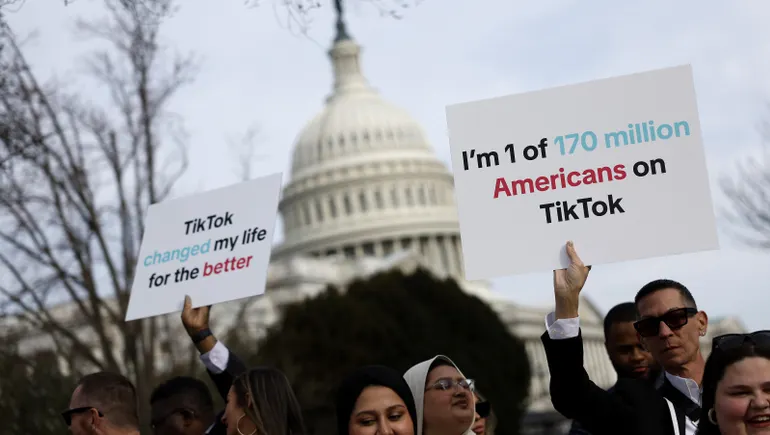
Time is growing increasingly urgent as the U.S. Supreme Court weighs whether to uphold a law that could lead to TikTok being banned in the United States on Sunday. If the ban takes effect, marketers will face a major shock, needing to reallocate billions of dollars in advertising budgets, adding a new variable to an already turbulent year for social media.
As marketers weigh their options in the event the ban takes effect, Meta's recent pullback in content moderation could become one of the factors considered in their media buying decisions. The recent turbulence in the social media space means a significant portion of this year's advertising budgets could face a reshuffling.
"Social media has always been a highly dynamic space. I think the style and type of changes often vary by season," said Scott Sutton, CEO of influencer marketing platform Later. "Right now, the dramatic shifts in the political landscape—whether it's the election results or the TikTok ban—are largely shaping the direction of the entire ecosystem."
TikTok and its Chinese parent company ByteDance went to the Supreme Court on January 10 to contest a law signed by President Joe Biden. The law requires TikTok to complete a sale to American owners by January 19—the day before the second Trump administration's inauguration—or face a ban in the United States. Company lawyers argue that the ban would violate rights protected by the First Amendment. However,this argument does not appear to have had much impact on the government's ongoing national security concerns。
The Supreme Court could rule on TikTok's fate at any time, though the latest reports as of press time indicate thatthe platform is preparing to shut itself down in the United States on Sundayunless government intervention allows it to continue operating. The ban would affect170 million American usersand millions of content creators. At the same time, it would also end aplatform that provided brands with a powerful connection to younger generations—a reality that has become increasingly apparent as advertisers begin seriously planning their next moves.
"Previously, when we surveyed CMOs and marketers about their plans for TikTok—that was earlier in 2024—they said their investment in TikTok was increasing rather than decreasing," said Kelsey Chickering, principal analyst at Forrester. "And now... I think the sentiment is to create contingency plans and think about where these media budgets can flow."
Although there are some obvious candidate platforms that could absorb reallocated TikTok advertising budgets, other changes within giants like Meta could make these decisions more difficult. Meanwhile, funds invested in TikTok's e-commerce space may be difficult to transfer smoothly. Ultimately, this looming ban is teaching brands a harsh lesson about flexibility, the value of a diversified media mix, and the importance of understanding target audience behavior.
Budget reallocation
During last week's Supreme Court hearing, Noel Francisco, lawyer for TikTok and ByteDance, argued that if the ban is upheld, the platform would"go dark"on January 19. The ban would make it illegal for app stores like Google and Apple to distribute or provide updates for TikTok. Under the law, existing users could still open TikTok on their phones, but without updates, the app would gradually become unusable.
Sutton explained that if the ban is upheld and the app remains available to existing users after Sunday, it could still be beneficial for brands to maintain a presence on TikTok to handle wrap-up matters.
"I think if you're at the tail end of a campaign and have already deployed your advertising budget, unless the government takes more drastic action, there will likely still be a healthy user base and audience on the platform to receive your message," Sutton said.
Whether TikTok will still be usable remains unclear. Sources familiar with TikTok's plans, as first reported by The Information, have confirmed that unless the government intervenes, the ByteDance-owned app plans to abruptly shut down on Sunday. Under that plan, existing users attempting to open the app would be redirected to a website providing information related to the ban.
The TikTok ban discussion comes as social media continues to grow as an advertising channel. U.S. social media advertising spendingis expected to exceed $82 billion in 2025, up from $75 billion the previous year. Although TikTok's impact on this total is significant—Madison and Wall estimates the platform generated approximately $8 billion in U.S. advertising revenue last year—Chickering said this year's spending forecasts are likely to remain similar, with funds originally destined for TikTok shifting to Meta and Google. However, money invested in TikTok e-commerce, especially through TikTok Shop, may not transfer as easily.
"Because TikTok has performed strongly in that area, this could mean some funds flow back to traditional performance marketing or search to support e-commerce businesses," she said.
In predicting which platforms would benefit most from the ban, Madison and Wall expects 30% to 40% of spending to flow to Google (primarily YouTube) and Meta respectively, 10% to 20% to Snap, and another approximately 10% to 20% to other platforms. Regardless of where advertising budgets flow, brand marketers' focus on the types of influencers that helped brands rise on TikTok is not expected to diminish, said Zarina Stanford, chief marketing officer at Bazaarvoice.
"I think regardless of whether the TikTok ban happens, that investment pool—if you will—has already been growing, and that growth will continue," Stanford said.
Life without a ban
Since TikTok appeared in the United States, it has repeatedly found itself in political turmoil, including an attempted ban during Trump's first term in 2020. Trumphas since changed his position. TikTok's most recent ban attempt began last spring, when the ban bill named the "Protecting Americans from Foreign Adversary Controlled Applications Act" quickly passed the House and Senate, and was subsequently signed into law by President Biden.
TikTok and ByteDance sued the U.S. federal government over the law in May, but the law was upheld by a federal appeals court in December. Some people have expressed interest in acquiring the app. Agroup of American investors, including billionaire Frank McCourt, as well as reportedlyX owner Elon Musk, are the most prominent potential buyers, although TikTok has said that separating from ByteDance is"impossible"。
"This forces everyone to understand and own their audience more deeply, to be able to interact with them directly, and to realize that social networks may not always be the most effective channel for you to communicate with your audience."
—Scott Sutton, CEO of Later
Trump's team has alsopushed to extend the Supreme Court's deadlineuntil after he is sworn in on January 20, but no extension has been granted yet. Although the ban taking effect on January 19 is more likely, there is also a possibility it could fall through—whether through anextension, a sale, or being completely overturned based on the First Amendment. Chickering said that if the ban does not take effect, TikTok is likely to continue its upward trajectory.
"I think advertisers will continue to increase spending, creators will continue to produce content on these platforms, and in some ways we'll return to business as usual, just without the shadow of a ban hanging over us," Chickering said. "We might even see brands that haven't previously invested in TikTok release budgets."
This ruling will also remind brands and creators of the importance of diversified content and platform presence, said Ed East, founder and group CEO of Billion Dollar Boy, in emailed comments.
"This will help creators and brands prepare for inevitable sudden platform changes, which we know are certain in such a dynamic and growing industry," East said.
Social media turbulence demands flexibility
As marketers plan which platforms to shift budgets toward, other developments in the social space could intensify the turbulence. Earlier this month, Meta announced it wouldend its fact-checking program and adopt a community notes system similar to Xto clarify claims made by users. The company alsoended its diversity, equity, and inclusion (DEI) programs。
Sutton of Later explained that these moves, viewed by many ascatering to the Trump administration, are likely a response to the broader political landscape shift. Althoughsome speculatethis change could affect Meta's advertising business, the outcome remains difficult to predict.
"Interestingly, if you do see a pullback in spending as a result, it would likely be masked by the fund transfers caused by the TikTok ban—assuming that scenario happens," Sutton said.
It's also worth noting that although Meta's moves resemble those of Musk's X, the latter app's audience size is only a fraction of Meta's, making it less valuable to most advertisers.
"This is a bit like a perfect storm of commentary and changes on both the Meta and TikTok sides, but on the Meta side... the reality is Meta is not X. It's a much more powerful paid media platform than X," Chickering said. "It was relatively easy for advertisers to leave X and take a stand, but the situation with Meta is different."
As marketers weigh their options, this pending ruling may bring into sharper focus that understanding target audiences requires going beyond what any single platform can offer, Sutton explained.
"This forces everyone to understand and own their audience more deeply, to be able to interact with them directly, and to realize that social networks may not always be the most effective channel for you to communicate with your audience," Sutton said.
