
Retail media networks accelerate expansion - is an industry inflection point approaching?
Retail media, once the fastest-growing channel in digital advertising, is now undergoing a strategic expansion from on-site to off-site (CTV, social, and open web programmatic). Although off-site ad spending is projected to reach $20 billion in 2024, declining profit margins, supply constraints, programmatic transparency issues, and retailers' digital capability gaps are casting a shadow over the industry's outlook.
Retail media once held the throne as the fastest-growing channel in digital advertising, attracting a large amount of brand budgets that shifted to performance marketing due to signal loss, thanks to its use of customer data. In the past, the industry narrative always revolved around explosive growth, with retailers touting the substantial revenue generated by their advertising businesses. However, the real test is just beginning.
This year, the strategic focus of retail media networks (RMNs) is shifting from on-site advertising—that is, running campaigns on retailers' own properties, such as their websites—to off-site areas, including connected TV (CTV), social media, and programmatic buying on the open web. RMN executives view off-site as a key step toward entering the mainstream, hoping to prove that their first-party data capabilities can not only serve retail scenarios but also reshape the broader digital advertising landscape.
"I think this is truly an expansion of the value proposition that retail media can offer," said Ali Miller, Vice President of Advertising Products at Instacart. The company has partnered with platforms such as Google, Roku, and NBCUniversal.
However, for retail media networks seeking to expand their appeal, the potential risks should not be underestimated. Without appropriate safeguards, retailers may instead exacerbate the long-standing transparency issues in the programmatic advertising space. More seriously, at a time when competition is intensifying and differentiation is crucial, individual networks may weaken their own value proposition to advertisers.
For now, advertisers and publishers seem to still be actively investing. According to data from the research firm Advertiser Perceptions,off-site programmatic retail media ad spending will reach $20 billion this year, a significant jump from $7.5 billion in 2023. Media giants, including Disney, are partnering with some top retail media networks to improve the precision of CTV ad campaigns, as advertisersplace more value on driving actual business outcomesrather than traditional video metrics like reach and frequency.
But behind the off-site trend are multiple pressures, with supply constraints being particularly prominent. Mature retail media networks are nearing their capacity limits for on-site ads, and further increases could harm the user experience. On the other hand, newer networks are at a disadvantage when competing for on-site inventory, and without off-site channels to leverage, they would be put in a passive position.
"One of the biggest drivers of faster off-site expansion is the limited on-site inventory," said Nicole Perrin, Senior Vice President of Business Intelligence at Advertiser Perceptions. "And off-site inventory is almost unlimited."
Google'sdecision to abandon the deprecation of cookiesis unlikely to weaken market demand for retail media, as CMOs are still being asked to improve advertising performance. Off-site is therefore seen as a lucrative opportunity, but it also comes with distinctly different financial, privacy, and ad quality considerations.
"Off-site advertising, at its best, can indeed deliver additional scale and performance promises," said Nicholas Ward, co-founder and President of ad tech company Koddi. "But at its worst, it could become the repeated resale of trusted customer data, ultimately flowing to those 'Made For Advertising' sites."
"Oh my god, where did my inventory go?"
As off-site activities become more active, the overall growth rate of retail media is expected to slow down. According to WARC data, the ad spending growth rate for this channel in 2025 will be 10.6%, a decrease of about three percentage points from 2024, due totrade budgets are drying up。
"We are nearing the end of a phase of transformation in retail media, or commerce media, where the story has been about growth," Ward said.
Retail media networks see off-site as a way to attract non-endemic advertisers, such as those in financial services and the automotive industry. With consumer packaged goods (CPG) budgets already showing weakness, these new buyers are expected to provide a boost. Compared to on-site scenarios where consumers are already on the retailer's website ready to shop, off-site advertising is generally more upper-funnel. But off-site media also means changes in return on ad spend and the level of control retailers have, which is a steep learning curve for many platforms still learning the rules of marketing.
"The reality is that off-site margins are lower," said independent analyst Andrew Lipsman (Media, Ads + Commerce). "While still healthy, on-site gross margins are typically 80% to 90%, while off-site may be only 20% to 40%."
For retailers with thinner core business margins, such returns are still attractive. However, lower off-site returns, combined with constrained on-site supply, come at a time when retail media is under greater public scrutiny.
"Much of the initial growth was built on the premise of unlimited supply to meet enormous demand. Now they are discovering, 'Oh my god, where did my inventory go?'"

Michael Jaconi
Co-founder and CEO of Button
Companies like Walmart and Amazon have begun to make ad sales a key focus in their earnings communications with Wall Street, and retailers generally view this as a strategy to improve profits. If future growth trajectories fail to meet the expectations previously set by retail media networks, the industry could face a reckoning.
"When retailers look ahead to the next quarter or year and start talking about the growth of these initiatives in the public markets, they assume unlimited supply to meet overwhelming demand," said Michael Jaconi, co-founder and CEO of retail media solutions provider Button. "Now they are discovering, 'Oh my god, where did my inventory go?'"
Wading into murky waters
Differences in financial conditions are only part of the off-site retail media puzzle. Retailers have historically been unsophisticated in digital media, and many of their on-site operations were built with the help of external vendors.
"Entering the ad sales space is not (retailers') core competency, and not all retailers have enough talent to support these opportunities."
Andrew Lipsman
Analyst, Media, Ads + Commerce
Off-site advertising adds more complexity to this equation. Retail media data is integrated into third-party services such as demand-side platforms (DSPs) and various apps for broad distribution across the internet.
"You could create a situation where, if you push data to too many places, you actually disintermediate yourself in a sense, weakening the value proposition you ultimately have," Ward said.
Programmatic advertising has also come under scrutiny due to recent research that revealedsignificant ad waste on 'Made For Advertising' (MFA) sites: these clickbait content farms use covert tactics to hide their true purpose of maximizing ad load. Although progress has been made in combating MFA, retailers must ensure that their off-site push does not exacerbate this problem. A lack of caution in executing open web programmatic expansion could also reduce the performance of retail media—a key factor that attracts advertisers.
"Even the most precise targeting data has zero effect if it is served to bot traffic," Lipsman said. "Entering the ad sales space is not (retailers') core competency, and not all retailers have enough talent to support these opportunities."
Build, rent, or buy
Some retail media networks are better positioned to overcome these obstacles. As retail media investment surges, platforms like Amazon and Walmarthave established dominance(the former is large enough to be its own category). The most well-funded players are able to recruit experienced talent, develop proprietary ad tech, and acquire media assets to strengthen their upper-funnel capabilities.
"For retailers outside the top five or top ten, the challenge of building an off-site business is that it requires a lot of technology and capability," Jaconi said.
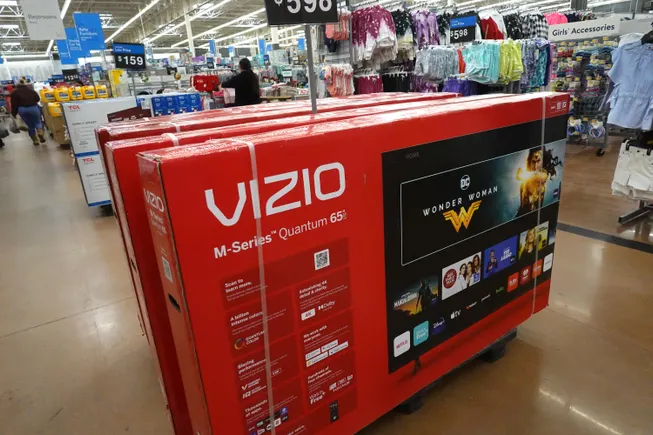
This gap could be particularly evident in the CTV space, an off-site channel where marketers are investing heavily. Amazon began showing ads on Prime Video in January, opening the floodgates for the convergence of CTV and retail media. Walmart, earlier this year, acquiredsmart TV maker Vizio for $2.3 billionto enhance its video capabilities. However, few other retail media networks are able to fully capitalize on the CTV boom.
"If you are not Amazon, which has its own streaming TV platform, or Walmart, which has the Vizio platform, you need to achieve these goals through other means," Perrin said.
Another path retail media networks can take is to follow the example ofBest Buy and CNETas well asInstacart and The New York Times Cookingpublisher partnership models. Digital media publisher partnerships are lower cost, andsome publishers are currently in a fire-sale state with depressed valuations。
"We may see M&A activity because many media companies have had their valuations depressed," Lipsman said.
Overstepping
As retail media networks prepare to open their next chapter, they will still face the question of an old problem: will they repeat the mistakes of the walled gardens of the past? Analysts agree that retail media can deliver superior performance, but the drive to sustain short-term profits through rapid off-site expansion may cause retailers to overstep their capabilities.
Meanwhile, advertiser attitudes are mixed: they covet first-party data but are dissatisfied with retailers imposing retail media purchases on marketing agreements. According to a survey by the Association of National Advertisers (ANA), an industry association representing marketers, nearly two-thirds of brands view retail media networks as a"must-buy" rather than a "want-to-buy" strategy. In the off-site era, will these sentiments get worse or better?
"Again, the promise is to create a seamless, connected experience throughout," said Ward of Koddi. "And the risk is that what our entire industry is selling may not yet be fully mature."