
Why Brand Refresh Has Become Mainstream in Marketing: The Shift from 'Big Ideas' to Systematic Brand Building
For the third consecutive year, marketers are favoring brand refresh, renewal, and repositioning over pursuing sensational creative ads. This strategy is widely adopted by fast-moving consumer goods giants such as Kraft Heinz, Unilever, and Pepsi, as well as digital-native brands, driven by the failure of performance marketing, dramatic changes in consumer behavior, and the urgent need for brand equity building.
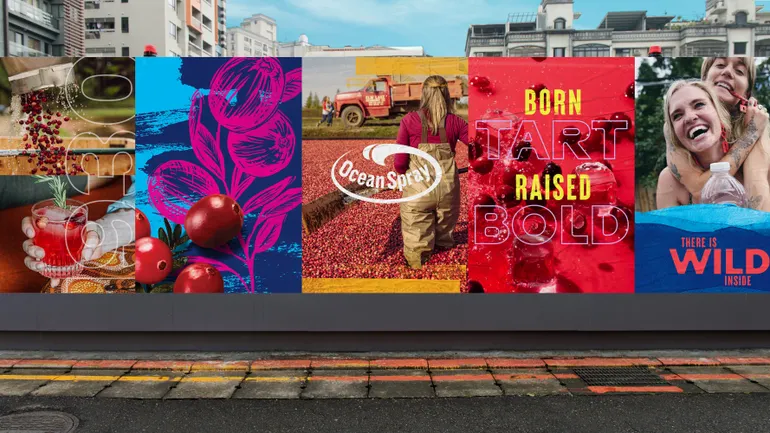
For the third consecutive year, many marketers are focusing their efforts on brand renewal, refresh, and repositioning, rather than pursuing creative stunts designed to generate buzz and conversation. While this strategy is primarily embraced by consumer packaged goods companies like Kraft Heinz, Unilever, and PepsiCo, it has also been adopted by restaurant chains, digital-native brands like Wayfair and Tubi, and even agencies looking to reach existing and potential customers with new priorities.
Even as the pandemic fades from view and Gen Z becomes a primary target for many marketers, the momentum behind brand renewal as a core marketing strategy does not seem to be waning. Recent cases stem from marketers' need for agility and flexibility at the execution level, enabling them to meet multiple objectives simultaneously: reinvesting in brand building after years of performance marketing; finding a holistic strategy across channels; and better leveraging insights about changing consumer behavior.
"For leaders, viewing the brand as a growth engine, rather than adhering to the traditional mindset that separates identity from marketing campaigns, has never been more important," said Lynne Field, strategy director at FutureBrand, IPG's brand and experience agency. "In a rapidly changing landscape where everything is being disrupted, every brand today is seeking to stay modern, stay relevant, stay agile, and quickly adapt to consumer needs."
Performance marketing still holds a significant share of budgets as marketers pursue the short-term wins and easily identifiable return on investment it can deliver. But for some leaders, the performance marketing well has run dry—there is no room for growth within the brand's existing customer base—or their brand is not deeply rooted enough in consumers' minds to differentiate beyond price. As the pendulum swings back from performance marketing to brand-building campaigns, 36% of marketers globally plan to increase brand marketing investment this year,according to eMarketer。
"People are eager to reconnect with consumers," said Chris Ertel, creative strategy director at brand agency BrandOpus. "Either (marketers) realize they don't know consumers deeply enough, or the insights they've gathered are wrong: 'I don't even really know who I'm selling to anymore, because the world has changed, or because I've been focused on who I can reach on Facebook, rather than who actually buys my product.'"

The pendulum swings
According to Kantar's "Brand Growth Blueprint" report, which analyzed over 14,000 brands, brand-building campaigns can reduce a brand's reliance on short-term performance marketing—over-reliance on which can lead to a decline in base sales. The report identified four factors that increase consumer brand propensity: perception of a strong consumer experience, functionality, or performance; breadth of design or product line; convenience; and excellent advertising. Jane Ostler, executive vice president of global thought leadership at Kantar, said brand building remains the cornerstone of all growth.
"Some brands either neglected this from the start—they may have been overly reliant on performance marketing—while others may have done brand marketing 8 to 10 or even 15 years ago, but now realize they have very little brand equity left," Ostler said. "Consumers have no brand awareness of them at all—they're just a name on a website."
To be more than just a name on a website, marketers are using brand renewal to build brands whose needs are evolving—but not all such efforts are equally effective. Direct-to-consumer brands are increasingly moving into physical retail, which requires a different visual style or a better, insight-driven brand story. Meanwhile, traditional brands need a more refined, modern filter for their brand stories, or extensions to find new audiences—rather than complete overhauls that could jeopardize brand equity.
"Brand marketers at these large CPG companies are in a tough spot," said Jason Cieslak, Pacific region president of brand experience company Siegel+Gale. "Their entire raison d'être is fighting for tiny market share in relatively fixed markets, so many are looking for extension opportunities, hoping to stay relevant in categories where the brand already has a degree of understanding, awareness, and affinity.
"Design is the best form of communication. Having brand symbols that consumers recognize often gives the brand a chance to succeed in adjacent categories," the executive continued.

The aperture of design
In crowded categories, brand renewal can be driven by insight rather than creative concepts. For Kraft Heinz's Mio, BrandOpus focused on the liquid concentrate product's core proposition around personalization, gradually upgrading to find ways to integrate the brand into consumers' daily lives as part of the "Wellness on your wavelength" platform.
"Once you find that opening, you can start thinking about what assets need to be developed to bring it to life, and then derive metaphors from it," said BrandOpus's Ertel.
Design can also carry the primary weight of a brand renewal aimed at new markets. Manischewitz launched one of this year'smost notable moves, undertaking a complete overhaul of the 130-year-old brand to break beyond the kosher aisle and attract younger, more diverse consumers. For agency Jones Knowles Ritchie, projects like its renewals for Manischewitz and Impossible Foods helpfuture-proof brandsand articulate their purpose, group strategy director Hayley Burnham previously told Marketing Dive.
"When you see a brand that started in a very specific niche suddenly able to appear in a broader context in a wider way," said Siegel+Gale's Cieslak, "you realize that somewhere a CEO said: 'What are we going to do with this brand? Someone better step in and figure it out.'"
Marketers are increasingly asking brand agencies to handle not only core brand assets like packaging, but also an entire ecosystem of brand elements spanning retail, digital, social, and PR channels. For budget-conscious marketers, these broad-scope efforts are easier to justify as providing overall value to the brand than limited design work.
"The practicality of this work makes the investment easier to accept," Ertel said. "We've finally achieved the holistic marketing campaigns we used to talk about often but never truly executed."

Proceeding with caution
Marketers considering how to refresh their brands should examine how the landscape has changed in recent years. Historically, core brand identity elements were seen as fixed, while creative campaigns were the flexible tools brands used to stay relevant. Today, the most powerful marketers use brand identity and creative campaigns to deliver purpose and experience.
"They view brand identity as another tool in the toolbox, one that can also be flexed when needed to drive or create relevance, deeper emotional connections, and love for the brand," said FutureBrand's Field.
That said, marketers must proceed with caution when changing core parts of brand identity. Over the past decade, traditional brands have looked to tech companies as design references, pushing design toward a minimalism that erases identity and assets. This trend may be waning, as maximalism has driven PepsiCo's successfulbrand renewal, as well as campaigns for brands like Mars' Skittles. Marketers must also be clear whether they are repositioning a product for new audiences or merely redesigning it—like applying a thin coat of paint.
"Often, a packaging redesign is praised as a brand renewal, but the product itself has no essential difference, hasn't entered new markets, and is just refreshed to look more modern," said Siegel+Gale's Cieslak. "The industry likes to call real design work branding, but they aren't always the same thing."
Despite the blurred lines between brand renewal, refresh, repositioning, and redesign, marketers remain committed to a strategy that helps brands emerge stronger as the pendulum swings back from years of performance marketing to the fundamentals of brand building.
"Clearly, we're still going to experience some long-term changes, but overall, people are returning to the office, and people are happy to get back out into the world," Cieslak said. "Many brands are starting to think differently about how they show up in the world."