
Calvin Klein's ad campaign with Jeremy Allen White sparks buzz, but the biggest impact may lie in brand image reinvention
Calvin Klein's 2024 spring underwear campaign, starring Jeremy Allen White, quickly went viral on social media upon release, generating an estimated $74 million in media exposure value according to PVH. The ad not only drove sales growth but is also seen as a key step in enhancing brand appeal and consumer loyalty under the PVH+ plan. Industry experts note that the campaign's success lies in precise timing and authentic presentation, but converting media buzz into long-term revenue remains a challenge.
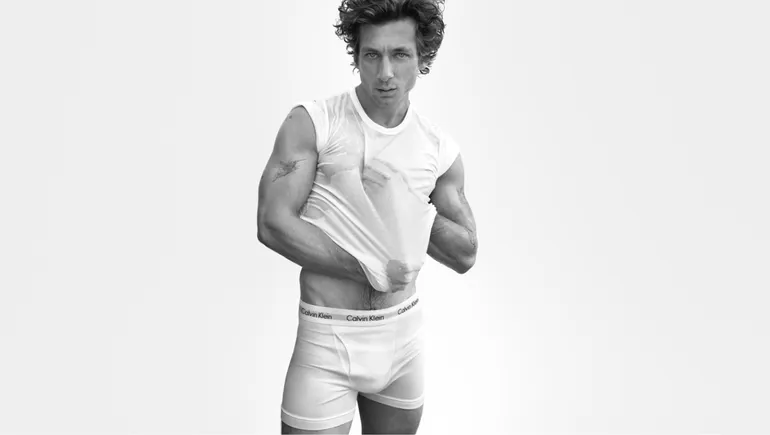
At the start of the new year, Calvin Klein released its 2024 spring men's underwear campaign featuring actor Jeremy Allen White. The ad quickly sparked a series of tribute videos on TikTok and generated multiple commentary articles, leading to widespread social media discussion. According to estimates by the brand's parent company, PVH Corp., the resulting social media exposure was valued at approximately $74 million.
In the campaign visuals, Jeremy Allen White appears in his hometown of New York, wearing classic Calvin Klein underwear styles, such as white cotton boxer briefs. The content includes photos and a video of White working out on a rooftop, with the song "You Don't Own Me" by Lesley Gore playing in the background.
White is the star of the hit FX and Hulu series "The Bear," whose third season premiered on Wednesday. At the Golden Globe and Emmy award ceremonies held shortly after the campaign's release, White and the series in which he stars received honors. White wore a black Calvin Klein suit and a sheer black shirt at the Golden Globes; on Tuesday in Los Angeles, attending the series premiere, he again chose Calvin Klein, wearing an oyster white tailored suit with a black tie.
Calvin Klein is a brand with a 56-year history, known for launching eye-catching and sometimes controversial celebrity campaigns. However, the campaign starring White stood out particularly in terms of attracting attention.
According to Launchmetrics data, within the first 48 hours after the campaign's release, the media activity generated $10.4 million in Media Impact Value (MIV), with the Calvin Klein brand itself contributing $699,000 of that MIV. Meanwhile, according to PVH's own measurement standards, the campaign generated $12 million in media exposure value during the same period.
For comparison, previous Calvin Klein campaigns starring Michael B. Jordan and Carlos Alcaraz generated MIV of $3.8 million and $827,000, respectively, within 48 hours of release (source: Launchmetrics).
The campaign was released as PVH is in the middle of a multi-year plan aimed at enhancing Calvin Klein's brand appeal and consumer loyalty.

During an analyst call in April, PVH CEO Stefan Larsson said the Calvin Klein brand is "driving the highest levels of consumer engagement in its history," thanks to "breakthrough marketing campaigns with top global talent." When analysts asked about the overall health of the Calvin Klein brand, Larsson cited these campaigns as examples.
"Earlier this year, we saw the results of this work with the launch of the spring campaign starring Jeremy Allen White, and we are excited to build on this momentum because Calvin's global product engine is firing on all cylinders," Larsson said.
However, converting media impact value into financial performance "is about turning those engagements into actionable connections that drive conversion," Benjamin Bond, former head of consumer practice at Kearney, said in an email to Fashion Dive.
What makes a successful Calvin Klein campaign
In PVH's most recent fiscal year, the Calvin Klein brand drove "higher consumer engagement than at any time in the brand's history," Larsson said on the call. He attributed this to its media campaigns, including the one starring White. He added that the campaign was "the most breakthrough marketing campaign in the entire fashion industry," although this claim could not be verified.
Additionally, Larsson said the brand has 134 million active followers on Instagram, up 60% year over year.
Larsson also revealed that in the first week of the campaign starring White, underwear sales jumped 30% compared to the same period last year.
"Calvin Klein's timing was impeccable."

Gina Kwok-Tischler
Associate Professor of Fashion Marketing and Management at Savannah College of Art and Design
That said, the campaign's visual presentation is not groundbreaking. The brand is known for launching underwear campaigns featuring celebrities, such as Mark Wahlberg's boxer briefs ad in 1992.
Other Calvin Klein campaigns have drawn attention for controversy, including ads featuring a minor Brooke Shields, ads involving nude minors, and more recently, a campaign starring FKA Twigs was partially banned by the UK Advertising Standards Authority.
Many of these campaigns generated massive traffic due to controversy, but White's campaign seems to have finally found a perfect moment for Calvin Klein to attract attention without sparking controversy. Perhaps, aside from finding the right brand ambassador at the peak of awards season, Calvin Klein not deviating from its historical tradition could also be one of the reasons for its success.
"Calvin Klein's timing was impeccable," Gina Kwok-Tischler, associate professor of fashion marketing and management at Savannah College of Art and Design, told Fashion Dive.
Kwok-Tischler noted that this digital-first campaign is part of Calvin Klein's strategy to reach a new generation of consumers, as many Gen Z and Gen Alpha consumers shop through digital channels first. White's appearances at award shows and the star power from "The Bear" also helped boost the campaign.
Turning MIV into revenue
In 2022, PVH launched a series of initiatives called the PVH+ Plan, aimed at enhancing consumer loyalty and brand appeal for Calvin Klein and its sister brand Tommy Hilfiger. The plan set financial targets including reaching global revenue of $12.5 billion by 2025.
The plan also included divesting parts of its underwear brand business, after PVH sold some of its heritage brand businesses to Authentic Brands Group.

"They divested a lot of heritage businesses, so if they can get Calvin and Tommy Hilfiger moving in the right direction, the overall business should see growth," Simeon Siegel, managing director at BMO Capital Markets, said in an interview.
At the end of May, Calvin Klein took another step by relaunching the Calvin Klein Collection line (which had been paused since 2019) to usher the brand into a "new era." The brand appointed Veronica Leoni as creative director of the line, with plans for a runway debut in fall 2025.
A brand spokesperson declined to comment for this article, stating the brand is in a "quiet period."
By business segment, Calvin Klein's sales performance has been mixed. In 2023, Calvin Klein North America saw revenue declines each quarter, which the company attributed to wholesale channel challenges. In contrast, its international business trended upward during the same period.
The company's first-quarter 2024 results marked the first time since 2022 that Calvin Klein North America achieved revenue growth.
Staying authentic
Effective marketing campaigns have always been an important part of Calvin Klein's business and have helped it grow to where it is today, with "incredible brand awareness," Siegel said. This is built on a foundation combining department store distribution and licensing partnerships.
When marketing is done right, it drives revenue, Siegel said, but the question is whether that revenue is realized immediately or gradually over time.
"PVH has historically also been very good at spending advertising dollars on brand-building marketing," he said. "Many of these campaigns are not designed to drive a specific purchase, and I don't think PVH's products are revolutionary... They are trying to stay top-of-mind when consumers are thinking about how to dress."

Kwok-Tischler believes the campaign had a clear goal: to introduce the brand to a new generation of consumers, and it incorporated elements that cater to recent trends among younger consumer groups.
"There's a lot of focus on retro right now, bringing back elements from the past and making them relevant to the present," Kwok-Tischler said. "A lot of Gen Z and Gen Alpha like going to thrift stores, going through their parents' closets, seeing what was popular in the past, and updating it for the future. This campaign... did a great job of tapping into that zeitgeist."
However, while attracting new consumers, it's also important for the brand to retain its existing consumer base, Siegel said.
Kwok-Tischler said authenticity is key to a successful campaign, and younger generations are especially adept at spotting inauthentic promotions or brand images, "and they will be the first to call it out."
This is particularly important for the campaign to reach this demographic.
"If you think of American fashion, you think of New York," she said. "Every aspect of this campaign truly embodies New York, and even Jeremy Allen White himself is from New York... From that perspective, it really created a very authentic campaign."