
How Generative AI Solves the Third-Party Cookie Deprecation Challenge in 2024
Google has begun phasing out third-party cookies, with a full deprecation planned for the second half of 2024. While the advertising industry explores various alternatives, generative AI is highly anticipated to compensate for missing signals by analyzing first-party data. However, the industry still faces challenges such as fragmented identity resolution and debates over the effectiveness of the Privacy Sandbox.
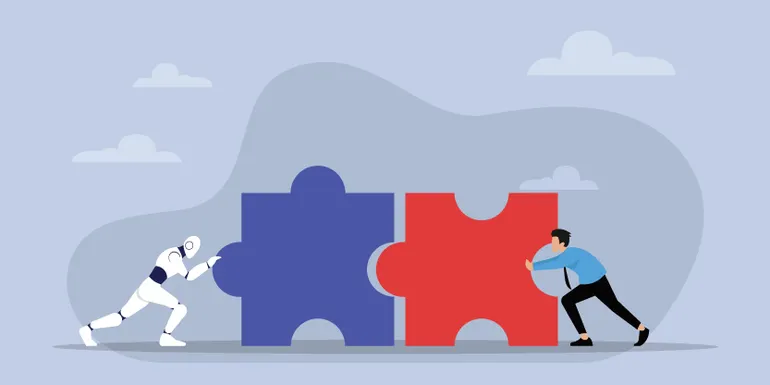
On January 4, 2024, Google officially disabled third-party cookies for 1% of Chrome browser users (approximately 30 million people), marking a substantial first step in the search giant's plan to phase out this tracking technology. As planned, by the second half of 2024, all Chrome users will no longer have third-party cookies, a change that will completely remove a tool long relied upon in the digital advertising space.
About four years ago, Google announced it would eventually phase out third-party cookies, sparking a race across the advertising industry to build, test, and adopt alternative targeting and tracking methods, whether using Google'sPrivacy Sandbox proposals, or solutions developed by other players.
Although numerous alternative IDs, identity graphs, and data clean room solutions have emerged in recent years, the key piece of the puzzle to solving post-cookie challenges may well be generative artificial intelligence (AI)—the hot technology that has captured the attention of advertising, tech, and mainstream culture over the past year or more.
"To bridge the gap left by the deprecation of third-party cookies, marketers must leverage AI to strengthen strategies based on zero-party and first-party consumer data," said Anjali Yakkundi, Vice President of Product Marketing at Movable Ink, in an email comment.
"AI can analyze consumers' digital behaviors, such as browsing history, purchase patterns, and engagement, to provide deeper audience insights while delivering personalized experiences," the executive added. "Additionally, brands can extend AI and machine learning in predictive models to gain insights into consumers' likely next actions, thereby proactively and strategically developing outputs that meet their needs before consumers even realize them."
The power of AI
To date, the advertising industry's focus on generative AI has largely centered on its ability to rapidly generate text and image assets, helping marketers achieve long-standing goals of personalization at scale. But AI's ability to sift through and analyze data with astonishing speed and accuracy could help marketers compensate for the signal loss caused by cookie deprecation.
"2024 will be the year of the true rise and expansion of additional intent signals," said Lynda Clarizio, media industry veteran and co-founder of early-stage venture firm The 98. "For a long time, we've had web-tracking intent and social intent. Now, we'll see the rise of transactional intent and contextual intent."
Experts point out that generative AI requires three elements to operate: proprietary first-party data, infrastructure to process that data, and data scientists to develop the data to train new models. When applied to advertising, these requirements will place tech giants like Google and Amazon in a "dominant position," Clarizio said.
"We're really like 'Back to the Future,'" Clarizio explained, linking the rise of digital walled gardens to previous walled gardens in TV advertising.
"Now we're heading back in the other direction, partly due to cookie deprecation and the inability to use data signals more broadly," Clarizio added. "You're effectively confined to first-party data, which makes sense from a privacy standpoint, but it also reinforces the advantages of these large players."
However, other players are also beginning to leverage generative AI to re-rank search results quickly and effectively, and to provide users with richer, more personalized experiences. Other use cases for the technology are still in development.
"As agencies and talent find practical applications to reduce costs and accelerate processes, AI will become more pervasive," said Rob Davis, Chief Marketing Officer and President of independent agency Novus, in an email comment. "This will go beyond media optimization and data compilation—for example, applying generative AI to simulate focus groups to gain insights at low cost."
The race for data and identifiers continues
The demise of cookies will be a major test of marketers' efforts to obtain first-party data, as well as zero-party and second-party data, in privacy-safe ways. The ongoing push for data may encourage brands, agencies, and publishers to form more data cooperatives, enabling parties to share data that can then be used to fuel generative AI efforts.
"I've long been anticipating the rise of data cooperatives that truly extract first-party data from various digital properties and consolidate it to compete with Google's capabilities," Clarizio said. "Perhaps in 2024 you'll see more of these collaborations, because generative AI will enhance the ability to create them. It's like identity graphs on steroids."
Beyond addressing marketers' first-party data challenges, in 2024 the industry will also face a fragmented landscape of alternative ID providers, including The Trade Desk's Unified ID 2.0, LiveRamp's RampID, and dozens of others, all vying for market share and offering different use cases.
"If you're a buyer, it's absolute chaos," said Eli Heath, Head of Identity at Lotame, which offers Panorama ID. "Part of that leads to paralysis because people think: 'What should I use? Will there be a winner-take-all?'"
Marketers shouldn't expect a single ID to rule them all. Instead, they may need to coordinate behavioral addressability and contextual strategies across a variety of approaches, Heath said.
"It's really going to be a 'basket approach,' not just in the cookieless identifier space, but in the overall strategies and tactics deployed in programmatic advertising," the executive added. "I truly think it's going to be a mixed bag."
Pushback against Google
Beyond data and identifier solutions offered by ad tech and agencies, marketers in 2024 will still have to contend with the elephant in the room—Google. If the company's latest timeline holds, there's still much work to be done before the second half of 2024, and questions around verification, measurement, and attribution still outnumber answers, said Paul Bell, President of ad tech company 33Across.
"Only once buyers see results that can be measured by marketers or trusted third parties (i.e., not just Google) will Google and the market have confidence to move beyond the 1% test scope," Bell said in an email comment. "For this transition to go smoothly, Google needs to ensure partners can tie marketing spend to trusted conversion metrics. Given the ad dollars involved and the number of partners to appease, this timeline seems quite aggressive."
To ease concerns about a cookieless future, Google continues to develop its Privacy Sandbox proposals. Throughout the process, many groups have questioned Google's claims about the effectiveness of the new solutions. Early testing still reveals "real challenges,"according to the IAB Tech Lab。
In response, Google, via ablog post, pushed back against various objections regarding the sufficiency and complexity of the Privacy Sandbox, signaling the company's commitment to its timeline and plans.
"We believe the current Privacy Sandbox APIs, which have been generally available in Chrome since September, are ready to lead the ecosystem toward a more private future. We are committed to advancing privacy-enhancing technologies for years to come, both in terms of privacy and utility," wrote Victor Wong, Senior Director of Product Management for Privacy Sandbox.
"A wave of action is beginning, and I think reality is going to start slapping the industry in the face."

Matt Hertig
CEO of ChannelMix
That said, advertisers shouldn't pin all their hopes on the Privacy Sandbox, nor should they expect Google—the dominant player in this market—to be the "savior of the advertising world," said Mathieu Roche, CEO and co-founder of ID5, in an email comment.
"Throughout this process, it's important to remember there are many alternatives, including universal IDs, identity graphs, and data clean rooms, which have proven effective in cookieless browsers like Safari and Firefox," Roche said. "Advertisers only have a few months left to ensure they can effectively reach audiences and measure results over the long term."
The most prepared marketers won't wait much longer to implement cookieless plans. Moreover, the second-half 2024 deadline remains vague and could arrive sooner than expected: Lotame's Heath predicts that by Q3, more areas may already be cookieless to avoid disrupting the critical Q4 ad buying period.
Advertiser awakening
A recent survey conducted for the PrimeAudience ad network found that 88% of U.S. marketers feel confident about cookie deprecation, with more than half already testing a cookieless future. Still, nearly a third don't know how to use Google's Protected Audience API (formerly FLEDGE), even though 68% plan to use Privacy Sandbox proposals in 2024. Beyond Google, more than half (53%) of marketers see AI as part of the solution.
"While it's encouraging that U.S. marketers feel confident about their readiness for a cookieless world, there remains a desire to continue implementing effective solutions," said Mateusz Rumiński, Vice President of Product at PrimeAudience, in a statement. "We believe that new ad technologies combined with the best use of generative AI and first-party data can lead to a thriving advertising ecosystem."
Consistent with the PrimeAudience survey, some observers see much of the advertising industry finally coming to grips with what the demise of cookies means for advertising, and this shift will only intensify as the countdown continues.
"A wave of action is beginning, and I think reality is going to start slapping the industry in the face," said Matt Hertig, CEO of analytics firm ChannelMix. "This could be one of the most significant shifts in how we understand marketing impact in the past 15 years... And that's where the real excitement lies in AI's ability to reinvigorate marketing analytics."