
The 2023 Brand Backlash Wave: Marketing Missteps or an Inevitable Result of Weak Brand Building?
In 2023, marketing strategies centered on 'mission' encountered an unprecedented wave of brand backlash, from declining Bud Light sales to Unilever's strategic pivot, reflecting a structural contradiction between the industry's excessive pursuit of short-term performance and insufficient long-term investment in brand building. Drawing on insights from multiple industry experts and the latest data, this article analyzes the deep-seated reasons behind brand failures and explores how brands can recalibrate their positioning amid political polarization and the impact of AI.
In 2023, mission-driven marketing strategies came under fierce attack, as a series of controversies plunged well-known brands into months-long public opinion storms. This backlash was not limited to online arguments but actuallyimpacted sales and revenue, and created a chilling effect in an industry already facing economic pressure. Although the reasons to support mission marketing remain strong,a large amount of research also shows its potential benefits are considerable, these missteps may just be symptoms of a deeper problem—weak brand foundations.
Experts point out that under increasing pressure for short-term performance, Chief Marketing Officers (CMOs) have over-leaned into performance media, leading to blurred brand positioning and a lack of resilience against risk. Meanwhile, advertisers and agencies are dealing with the existential threat posed by the rise of generative AI, which may make companies without a distinct brand identity even more vulnerable. In 2023, marketers were mostly worried about whether their jobs would be automated away, but the complexity and nuance inherent in mission marketing may still require human judgment to navigate.
"The importance of purpose-driven marketing may never have been higher," said Margot Acton, Managing Partner for Brand Strategy at Kantar. "Algorithms are making choices for people. If your brand doesn't quickly come to mind and stand out in a meaningful way in areas I care about, then you're in trouble."
As the U.S. enters another contentious election cycle and inflation cools slowly, brand building will be tested in a precarious environment, with mission marketing becoming one of the most vulnerable strategies amid attacks on "woke" culture。The definition of "purpose" is flexible, but it is generally understood as the values a brand upholds beyond profit, such as protecting the environment or supporting diversity, equity, and inclusion (DEI).
In the future, the hard work for these causes may happen more behind the scenes rather than in ad campaigns full of buzzwords. This suggests that purpose needs to become a function that reaches the entire C-suite, not just the CMO. As 2023 drew to a close, it was also a moment of reflection for brands that had rushed into mission marketing without being prepared for the long haul, having alienated consumers in multiple ways.
"Some basic principles and premises have been forgotten," said Rosemarie Ryan, co-founder and CEO of strategy consultancy Co:Collective, which focuses on helping companies live their purpose. "Some damage has been done."
A perfect storm
A combination of factors hindered the progress of purpose-driven marketing and ultimately led to weak brand-building output this year. The economy remains mired in uncertainty, making marketers more beholden to quarterly performance metrics. For CMOs worried about losing their jobs over a campaign element that becomes a national talking point, defending criticized work is a daunting task.
"When you could say 'screw it,' you could say 'screw it,'" said Brandon Rochon, creative director at independent ad agency Hothouse. "But now, you can't."
Compounding this unease is growing political polarization, which has rarely cooled over the past two election cycles and is heating up again as 2024 approaches. Online safeguards and civility seem precarious at a fragile moment. On X (formerly Twitter), under Elon Musk'slooser moderation rules, hate speech has reportedly increased. Musk himself has been heavily criticized since acquiring the platform last year, most recently forexpressing support for antisemitic conspiracy theories。
"When things blow up, the data gets obscured. We only see the immediate reaction and miss the long-term impact."
— Rosemarie Ryan, Co-founder and CEO of Co:Collective
But the toxicity is not limited to X; misinformationcontinues to spread on social media, exacerbated by concerns about AI and deepfakes. Meanwhile, in a weak advertising market, quality publishers are struggling or even shutting down entirely. Marketers, in the name of brand safety, are keeping ads away from controversial topics like abortion and climate change, but thisalso undermines genuine news and analysis。
In this fragmented environment, mission marketing has become an easy target, easily linked to corporate cynicism and the anti-"woke" movement. Last spring, Bud Light was caught off guard. A boycott triggered by a partnership with transgender influencer Dylan Mulvaney caused the brand tolose its long-held position as the best-selling beer in the U.S., and its parent company Anheuser-Busch InBev'sU.S. CMO Benoit Garbe resigned in November. Anheuser-Busch InBevsaw U.S. revenue drop 13.5% in the third quarter, indicating the boycott continues to weigh on its business. Advertisers are entering 2024 with fear, worried they might face a similar sudden blow over a seemingly innocuous action.
"Brands are increasingly aware that doing this well requires enormous effort and strategic energy," Acton said. "There's a fairly stubborn resistance to what success looks like."
Even companies known for integrating purpose with brand building areadjusting strategies amid growing investor pressure, shifting consumer tastes, and public skepticism. Unilever was a pioneer in advocating sustainability and body positivity discussions in the consumer goods sector. But the brand, which owns Dove and Hellmann's, is in a leadership transition and has admitted its recent efforts were unfocused, suggestingnot every brand in its vast portfolio needs to be built around a purpose。
"Our focus on purpose is commendable; it has inspired many people to join and stay at Unilever, so we must never lose it," said Unilever's new CEO Hein Schumacher in a recent trading update. "But I don't think forcing a purpose onto every brand advances that cause."
A lopsided balance
Brand experts believe marketers bear at least some responsibility for the backlash against mission marketing. Too many jumped on the bandwagon because it was trendy, only to retreat or stay silent in the current difficulties. Others remained stuck in their ways, failing to do the necessary "health checks" and not recognizing that what worked in 2016 or 2019 might not work in 2023.
"There's a fairly stubborn resistance to what success looks like."
— Margot Acton, Managing Partner, Brand Strategy at Kantar
Experts generally agree that a lack of unified understanding internally about what purpose means and who is responsible for purpose-driven initiatives is one of the industry's biggest stumbling blocks. The CMO is often the public face of mission marketing, but to prevent communication breakdowns, the entire C-suite should be involved.
"Poor execution gives anyone a reason to attack you," Acton said. "The problem is poor execution, not the commitment to stand up for important things."
Strategists point out that beyond messaging missteps, marketers have over-prioritized performance media that fails to give brands a unique voice. Retail media is currentlyone of the biggest magnets for consumer packaged goods spending, but it is mostly concentrated in sponsored product listings and display ads aimed at driving transactions. According to Hothouse's Rochon, companies like Apple or Nike, which are deeply entrenched in consumers' minds, might more easily shake off controversies thanks to their brand strength and a certain creative vitality. If CMOs want to guard against today's marketing pitfalls (whether purpose-related or not), the pendulum may need to swing back toward brand building.
"You can only push on the lower funnel (performance marketing) for so long," Kantar's Acton said. "If you take your foot off the gas on what the brand means and stands for, the cost of pushing the lower funnel will only get higher."
"It's a balance issue many marketers are very worried about. But they operate in organizations with very short-term goals," Acton added.
A widening ideological divide
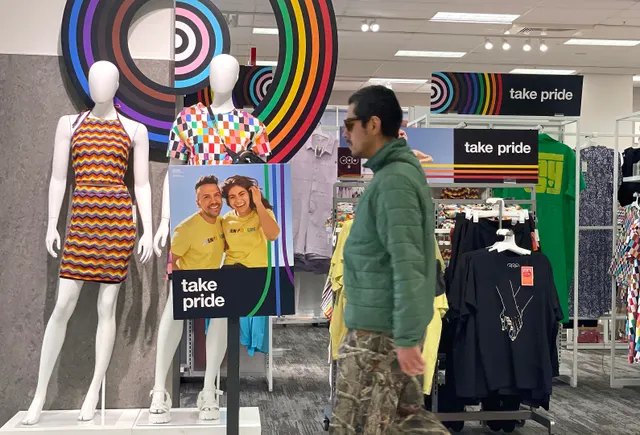
The wavering attitude toward purpose and weak brand building has provoked strong reactions from people across the political spectrum—some stoking anger, others feeling betrayed by brands they once saw as allies. The latter stung Target, whichscaled back some of its "Pride Month" promotions last summer, with management arguing it was to ensure employee safety, but this still angered parts of the LGBTQ community. Reactions on the /r/Target subreddit, including from employees, highlighted this sense of betrayal,with multiple users saying the retailer caved to bullies, setting a worrying precedent.
Putting aside activist groups, brands may underestimate the overall fatigue of consumers and the impact this could have on reactions to bold brand-building strategies. According toresearch from Morning Consult, among surveyed U.S. adults, less than a third (29%) across age groups believe companies should use their influence to affect political and social issues. This is higher than before the pandemic but lower than in 2020, although differences between demographic groups are widening in notable ways.
"The American public's acceptance of companies speaking out on political and cultural issues is similar to the 2020 presidential election period," the Morning Consult report said. "But generational and ideological divides are widening, between Gen Z adults, millennials, and Democrats on one side, and Gen X, baby boomers, and Republicans on the other."
Despite a host of serious challenges, mission marketing will remain a focal point of marketing discussions for the foreseeable future. Morning Consult's insights on Gen Z and millennials highlight why: among these respondent groups, 41% support brand activism, up from 27% in 2019. Younger groups hold particularly strong views on companies speaking out on climate change, workplace diversity, and U.S. racial issues, with the latter showing the largest support gap between Gen Z, millennials, and their older counterparts.
In 2024, as distinguishing truth from falsehood becomes increasingly difficult, a brand positioning that addresses real problems—assuming it is backed by evidence and action—may resonate. Companies also need to confront the fact that the heated arguments that triggered boycotts in 2023 may persist. Under short-term thinking, pausing mission marketing—and continuing to move away from long-term brand building—might make sense, but it could pose an existential risk.
"When things blow up, the data gets obscured. We only see the immediate reaction and miss the long-term impact," Ryan said. "Whether companies like it or not, they are being drawn deeper into these conversations. This isn't going away."
