
Bubble Gum Classic: How Bazooka Leverages Nostalgia to Drive Sweet Growth
Bazooka bubble gum, introduced by Topps in 1947, became a classic through its unique flavor and Bazooka Joe comics. Today, amid dramatic shifts in the candy market, the brand maintains growth through nostalgia strategies while exploring innovation. This article analyzes its history, market position, and the long-term viability of nostalgic marketing.
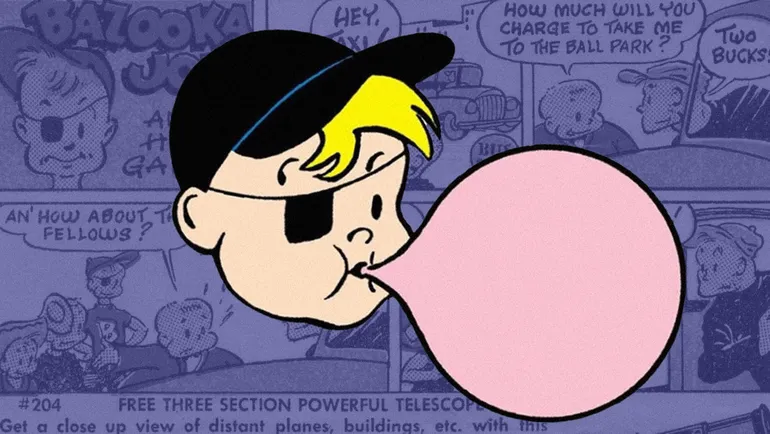
In 1947, Topps created a bright pink square bubble gum that was initially hard to chew, with a sweet aroma and rich fruity and marshmallow flavors. Years later, the company added the now-iconic Bazooka Joe and his gang comics to its wrappers.
Now, 76 years later, consumers are still chewing these sweet squares and rectangles of Bazooka bubble gum that are hard at first and then soften. Although the candy landscape and consumer trends have changed dramatically over the past three generations, Original Bazooka Bubble Gum has remained consistent.
Rebecca Silberfarb, Vice President of Marketing for Bazooka Candy Brands in the Americas, said Bazooka has successfully maintained its iconic status over the decades.
"What people knew it as 75 years ago or during their childhood is still the core of the brand today," she said. "We are a brand that brings 'edible entertainment,' which is what we call it internally."
Today's kids—and former kids—open the red, white, and blue wrapper, read the comic, chew until it softens, and then try to blow a bubble, Silberfarb said. The original recipe of the bubble gum has not changed, the packaging is similar to decades ago, and the eye-patched Bazooka Joe and his pals still entertain people with dad-joke comics and sometimes puzzling fortunes like "You might want to wash your old sneakers."
At the corporate level, Bazooka has undergone many changes. Bazooka was founded by Topps, which later became a well-known trading card company. Topps' candy division was renamed Bazooka Candy Brands in 2009. Over the years, the company added brands such as Ring Pop (its best-selling product) and Push Pop. Silberfarb said Bazooka is actually one of the company's smaller brands.
Although newer brands align more closely with specific trends among young candy consumers, Silberfarb said the company constantly works to keep Bazooka stylish. They have tried adding graffiti-style designs to packaging, replacing comics with puzzles, bringing the brand and Bazooka Joe to social media, adding sugar-free varieties, and designing new packaging formats and purchasing methods.
But for the most part, the company has found that consumers want the classic Bazooka bubble gum they have known for years. Some less popular changes were rolled back, while some new innovations—such as flavors and sugar-free varieties—were retained.
"It's about staying true to our consumers and the essence of the product while evolving with the times," she said.

From market leader to nostalgia king
To celebrate its diamond jubilee last year, Bazooka produced ashort documentary。
about its history and market influence. Former Topps CEO Arthur Shorin tells the story of how the iconic bubble gum brand was founded in Brooklyn, New York, in 1947. His father, Joseph Shorin, co-founded the company with brothers Abram, Ira, and Philip, after previously trying less sweet flavors that did not sell well. Bazooka's iconic flavor was born after sugar rationing ended following World War II.
Early on, the bubble gum quickly became popular for two reasons. The company attracted retailers by bundling other products in the packaging, allowing them to sell at full profit. In the documentary, Shorin shows a box containing 240 pieces of Bazooka bubble gum, along with three 25-cent bottles of Bufferin aspirin—meaning retailers earned an extra 75 cents in profit.
"What people knew it as 75 years ago or during their childhood is still the core of the brand today."

Rebecca Silberfarb
Vice President of Marketing, Bazooka Candy Brands, Americas
As Bazooka entered more retailers, Topps actively promoted its bubble gum to children. The brand advertised in comic books, newspapers, and broadcast media. The comics attracted young fans, who at one point could collect them and redeem them for various prizes.
"Then we captured 10% of the market share," Shorin explains in the documentary, "15%, 20%, 30%, 40%, 50%. Bazooka became not only a national brand but an international one."
Today, Bazooka's market share has shrunk significantly. Other brands entered the bubble gum space, and the appeal of the gum market has expanded. Some consumers seek sweetness and the ability to blow big bubbles, but others look for fresh breath or different flavors—areas where Bazooka bubble gum does not excel.
However, Bazooka's sales are still growing, Silberfarb said. Over the past year, Bazooka's sales increased 10% year over year.
Today, most consumers who buy Bazooka are adults who loved it years ago.
"There is a lot of adult nostalgia," she said.
Silberfarb said this nostalgia has indeed helped Bazooka succeed over the years.
The company has also done extensive work licensing its logo, characters, and color scheme. Bazooka Joe appears on numerous T-shirt designs, baseball caps, and accessories including golf club headcovers. The iconic character has even been immortalized asLOL Surprise dolls。
This month, Bazooka collaborated with four artists to create bubble gum-inspired artwork. These works—a puffer jacket, a BMX bike, a rug, and a painting—showcasing bubble gum inspiration through modern art will be auctioned to support the Make-A-Wish Foundation.
Silberfarb said merchandising and the memories many people associate with the brand complement each other, keeping it top of mind.
"It's hard to imitate Bazooka because it has so much heritage and nostalgic love," she said. "...We are fortunate to have maintained 75 years of tradition and authenticity, and people see it as unique."

The 'new nostalgia' attempt
Nostalgia is a huge sales driver in the candy space.
In recent years—especially amid the uncertainty of the COVID-19 pandemic—nostalgic candy has thrived, said Christopher Gindlesperger, Senior Vice President of Public Affairs and Communications at the National Confectioners Association. The NCA does not directly track sales of nostalgic candy brands, but he said nostalgia has expanded as people overall have increased their candy consumption.
Because many consumers have emotional connections to candy and sweets, brands that produce these products have particularly close relationships with consumers, Gindlesperger said.
"That's the magic of this industry," he said. "Companies produce products that truly fit a need, filling a gap at the level of human emotional well-being."
Few categories can leverage the consumer pull of nostalgia like candy, Gindlesperger said. Consumer memories can send sales into overdrive. In 2018, when the former New England Confectionery Company informed employees it faced closure for financial reasons, sales of its eponymous Necco Wafers soared, with one online retailer reporting an immediate 50% increase in sales. The wafers, produced since 1847, are a nostalgic staple, though not universally popular.
"That's the magic of this industry. Companies produce products that truly fit a need, filling a gap at the level of human emotional well-being."
Christopher Gindlesperger
Senior Vice President of Public Affairs and Communications, National Confectioners Association
Although much of the sales come from nostalgic adults, Gindlesperger sees Bazooka as an example of a brand pursuing what he calls "new nostalgia."
"You operate around the strong brand assets you have, whether it's a specific product or the entire company, and then build on that, introducing innovative products and packaging to offer consumers," he said. "Get them involved and take them along on the journey with you."

Nostalgia as a long-term strategy
The prevalence of nostalgia in recent food and beverage brands is not surprising, said Shelley Balanko, Senior Vice President at the Hartman Group, which researches and analyzes American food and beverage culture.
Looking back, Balanko said nostalgic brands often perform well during uncertain times. They saw growth during the Great Recession, the COVID-19 pandemic, and even during periods of high inflation.
"The meaning of nostalgia is to create comfort and connection," she said. "Comfort is an emotion gained through a sensory experience or memories associated with a nostalgic food experience. Connection is a connection to oneself, perhaps to a past self that was less stressed and less anxious."
However, nostalgia alone may not be a sustainable growth strategy, Balanko said. If a favorite food or beverage looks and tastes exactly the same in modern times as it did generations ago, it will certainly attract some consumers seeking a return to easier times. But yesterday's ingredients may not be what today's consumers want—especially products that may be higher in sugar, have ingredients that sound more chemical, or may be less sustainable or ethical. Marketing and messaging that were precise years ago may now be seen as out of touch, she said.
Bazooka has been working to address some of these issues, said Bazooka's Silberfarb. Sugar-free varieties, social media campaigns, and merchandising and marketing deals make the brand feel more modern.
Although nostalgic candy is a major category in the candy space, brands enter it voluntarily. Some of today's biggest brands—including Reese's Peanut Butter Cups, which celebrates its 95th anniversary this year, and Snickers, first sold in 1930—are not positioned on a nostalgic track. Balanko said these brands have evolved effectively over the years, retaining the aspects consumers have always loved while adding new lines or innovations.
Silberfarb said that while Bazooka is currently in the nostalgic candy category, the brand hopes to evolve slowly—and ultimately reach its 100th anniversary as a consumer favorite. She briefly summarized the brand's long-term goals.
"It's still about maintaining that relationship," Silberfarb said. "It truly goes beyond the bubble gum itself. The bubble gum is the catalyst for the product and the experience. But our iconic red, white, and blue, Bazooka Joe, the comics—bringing those everywhere and sharing them with our fans."