
Ice-Cold Beer and Heatwaves: How Two Major Beer Brands Tackle Climate Change
As climate change becomes an increasingly important issue for consumers, sustainable marketing has shifted from a bonus to a necessity. Corona and Coors Light—one positioned as premium and originating from Mexico, the other主打 affordable and locally brewed—have both launched sustainable marketing plans that align with their brand DNA. The former focuses on a "net-zero plastic footprint" and beach cleanups, while the latter has upgraded its "Born to Chill" campaign, using localized actions like "cooling billboards" to reach younger consumers. Drawing on insights from multiple executives and industry experts, this article explores how eco-marketing can avoid the suspicion of "greenwashing" and genuinely translate into commercial value.
Corona and Coors Light are two beer brands with distinctly different styles. The former is positioned as premium, while the latter prides itself on affordability; one originates from Mexico, and the other is brewed domestically. However, these two brands share a common point: both have launched sustainability marketing programs.
As climate change increasingly becomes a focus for consumers, sustainability has become a significant topic for advertisers. Corona and Coors Light have each launched sustainability marketing campaigns in ways that stay true to their brand identities, while positioning themselves for a new generation of consumers. For Corona, the key to the success of these efforts lies in providing a strong business case for building marketing campaigns around sustainability.
"For me, beyond personal conviction, the only way I can keep this going is by proving to the company that a sustainable business is better than any other business. It's not part of the business; it is the business," said Felipe Ambra, Global Vice President of the Corona brand at AB InBev. The executive revealed that he has demonstrated on multiple occasions that environmentally themed marketing campaigns deliver returns in brand equity and sales performance that are comparable to, or even better than, traditional product-centric campaigns.
For Coors Light, owned by Molson Coors, reinventing its popular "Made to Chill" marketing campaign has proven to be an effective way to generate impact through sustainability. Corona, held by AB InBev internationally and by Constellation Brands in the U.S., has taken a different approach. Over the past few years, AB InBev's division has launched a series of plastic-elimination initiatives, culminating in the opening of Corona Island—an island resort free of single-use plastics that will welcome its first guests in 2023.
Staying Authentic
As Gen Z consumers reach legal drinking age, alcohol brands are quickly catering to this demographic.
Mentioning "green transitions" and "carbon offsets" is especially important for reaching these elusive young consumers, as nearly 73% of Gen Z consumers say they are willing to pay a premium for sustainable products. By 2030, this generation will account for 27% of global income and will surpass Millennials' income levels a year later. Such purchasing power cannot be ignored.
Eco-friendly advertising may be one way to appeal to this generation. However, challenges exist as well. Beyond valuing the environment, Gen Z also values authenticity. "Greenwashing" can be quickly exposed, and such marketing campaigns may backfire.
Augie Ray, an analyst and Vice President in the Gartner Marketing practice, noted that 41% of consumers say they would boycott brands perceived as exploiting public sentiment. He cautioned that brands must ensure they have sustainable products and practices before making claims.
"Overall, our research shows that consumers believe most brands' social justice actions are more about making the brand look good than actually making a difference," Ray said.
However, even well-intentioned environmental efforts can face backlash. Earlier this year, Unilever CEO Alan Jope was criticized by a major investor for allegedly prioritizing sustainability over profits.
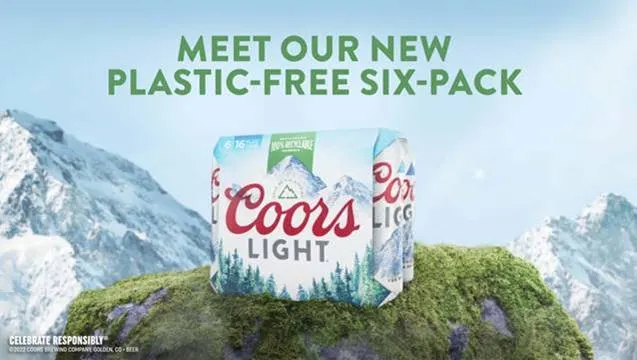
Before their advertising campaigns, Coors Light and Corona both committed to integrating sustainability into their production processes. Coors Light has pledged to eliminate plastic ring carriers by the end of 2025, investing $85 million in this effort. Since eliminating plastic rings requires a complete equipment overhaul, this initiative extends beyond Coors Light to encompass all brands distributed by Molson Coors in North America, including Blue Moon and Miller Lite.
Corona has taken a similar approach, gradually eliminating plastic from its production. In 2021, it became the first global beverage brand to achieve a net-zero plastic footprint worldwide.
"(Sustainable advertising) cannot be one-off. It cannot be 'greenwashing.' So, if you're going to go down this path, it's a commitment, and that commitment must be genuine and ongoing," Ambra said. "It needs to be consistent, and then you can begin to earn consumers' trust."
Staying Personal
A hallmark of a successful environmental marketing campaign is the ability to seamlessly connect the initiative back to the brand's purpose. AB InBev's Corona focuses on beach cleanups and removing ocean plastics because beaches are a core part of its brand image. Coors, on the other hand, has reinvented a popular campaign for new consumers.
Coors' 2019 "Made to Chill" campaign focused on relaxation. The ads often featured people opening a Coors Light after a hard day's work. "Chill" has always been a core element of the brand's image. Coors Light is meant to be served ice-cold, and the brewer even designed special packaging that changes color when the beer reaches the optimal drinking temperature. This laid-back brand image has long leveraged the popular meaning of the word "chill"—relaxation—in its advertising. Now, the definition has expanded to include "cooling the planet."
One example is the "Cooling Billboard," the latest extension of the "Made to Chill" campaign. Coors Light painted ads using reflective white paint on black rooftops in Miami, Florida, to help reduce home temperatures. According to the brand, this paint can absorb up to 85% of sunlight and lower rooftop temperatures by as much as 50 degrees, thereby helping to save on energy costs.
What makes the cooling billboards special is that they have a direct, visible impact on communities. There are no lofty, abstract promises about carbon offsets or reducing footprints.
"When we look to grow the brand and reposition it, mainly to attract new younger drinkers, we felt the need to build a stronger emotional connection, but we wanted that emotional connection to be consistent with everything that has shaped Coors Light's heritage," said Marcelo Pascoa, Vice President of Marketing for Coors Light.
Emotional connection has proven highly effective for both Coors Light and Corona. The latter has been trying to connect with consumers around sustainability through beach cleanup activities.
"Beach cleanups... are not about cleaning the beach itself, but about cleaning people's minds," Ambra said. According to the executive, beach cleanups do not solve the ocean plastic problem. In fact, most beaches only stay clean for a few days. But it helps consumers recognize the severity of the issue.
Focusing on small, localized initiatives like beach cleanups or cooling billboards also helps reduce the risk of brands appearing tone-deaf or engaging in "greenwashing." Experts say companies often rush to respond quickly to major national issues. The reason is clear. A 2022 Gartner study found that 48% of surveyed consumers believe brands must address social issues, regardless of the impact on profits.
However, if the response precedes internal change, it can appear reactive or exploitative. One example is Pepsi's now-infamous ad in which Kendall Jenner responds to police brutality issues with a can of soda.
"I think brands need to pay attention to (consumer demands). Not just pay attention, but truly begin to change their infrastructure, and the way they build relationships internally and with consumers," said Juliette Geraghty, Executive Creative Director at Eleven, Inc.
Ultimately, personal connection is the key to great environmental marketing campaigns because it helps win over consumers who identify with the cause. This is also one of the reasons why the cooling billboards work so well.
"I think (the cooling billboards) are a thoughtful shift from a very idealistic, unattainable campaign to one that is very relatable," said Chris Plating, Chief Strategy Officer at EP+Co, referring to Coors Light's "Made to Chill" campaign. "And I think they've done an excellent job of maintaining that thoughtfulness."
Staying Grounded
There is reason to believe that a successful and well-thought-out environmental marketing campaign can pay off. Beyond general consumer enthusiasm and visibility, sustainability may be more economical in the long run. Reducing the use of natural resources can lower costs, and governments often provide incentives for transitioning to sustainable energy.
Ambra said sustainability has already proven its value for Corona.
Research shows other marketers have found similar results. Between 2013 and 2018, products marketed as sustainable grew 5.6 times faster than those that were not. This is especially true in the consumer packaged goods sector, where products marketed as sustainable grew faster in 90% of categories.
"Whether or not it influences consumer behavior, sustainability is here to stay," said Gartner's Ray. "Companies must pursue sustainable practices for many different reasons, from cost efficiency, regulation, reputation, to culture. And yes, sustainability can influence consumer preferences."
Successful green advertising comes down to starting a conversation with consumers. Even small, local initiatives like the cooling billboards have the opportunity to be replicated nationwide, even if Coors Light is not directly involved. Anyone can paint their own rooftop.
"I think it's a great way to start a conversation, and that's more important than anything else," Coors Light's Pascoa said of the cooling billboards. "At the end of the day, anyone can do it, right?"