
Ice and Fire: How Whiskey Brands Attract a New Generation of Consumers
Whiskey has a long history, but the market is undergoing transformation. By 2025, the market is expected to grow by over 37%, reaching $109 billion. Millennials and female consumers are becoming the growth engine, and traditional brands such as William Grant, Diageo, and Pernod Ricard are attracting new audiences through educational content, celebrity partnerships, and ready-to-drink products.
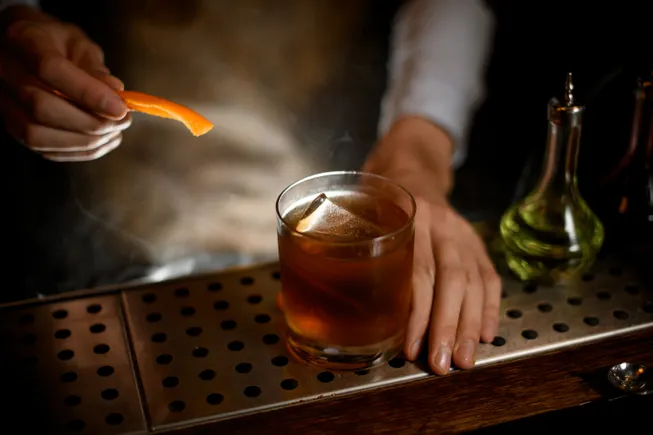
Whiskey (or whisky, depending on its origin) is a drink with a long history, but it may be facing an opportunity for marketing transformation. Despite its long history, whiskey has recently ridden a new wave of interest. By 2025, the market for this aged spirit is expected to grow by more than 37%, reaching $109 billion.
As younger competitors vie for market share, traditional brands repeatedly need to re-establish their market position. While the whiskey industry is largely dominated by a few large multinational groups that own distilleries older than some countries, emerging, social media-savvy brands are capturing millennial spending. For these established companies, advertising is crucial to staying relevant.
"As the whiskey industry rises, and millennials continue to seek out differentiated brands and products, we will continue to build broad awareness for our brands through paid, owned, and earned media strategies," Harvey Purchese, senior vice president of marketing at William Grant & Sons USA, said in an email to Marketing Dive.
However, maintaining brand relevance can be a challenge because millennials love novelty and newness. How do marketers repackage a beverage that has been commercialized for hundreds of years as something fresh? Especially one traditionally associated with older white men?
New consumers
In 1990, women made up 15% of whiskey drinkers in the United States. By 2020, that number had grown to 30%. Although women have been involved in distillation since whiskey's origins, at least in the U.S., the number of female whiskey drinkers has been low. Millennial women are beginning to break this pattern.
Some brands are responding to this trend. Pernod Ricard's The Glenlivet recently launched a campaign targeting the Australian and New Zealand markets, specifically aimed at women. In the ad, actress Anna Paquin speaks directly to women, encouraging them to drink whiskey however they like, whether mixed into a cocktail or—gasp—on the rocks (which many whiskey purists believe diminishes the experience).
The popularity surge among millennial women is largely driven by the overall rise in whiskey's popularity within the group. Millennials love cocktails, and whiskey is a key ingredient in many of them. For many, cocktails may be a gateway to broader whiskey appreciation. The taste of drinking any type of aged spirit neat can be off-putting to consumers. However, gradually learning to appreciate the flavor through cocktails and mixed drinks can help consumers transition to drinking whiskey neat, which may help guide consumers toward premium aged products.
Many brands recognize the need to gradually introduce consumers to premium products. Most people won't spend money on mid-to-high-end products just to mix them with vermouth and bitters. That's one reason why large groups like Pernod Ricard, Diageo, and William Grant & Sons produce affordable whiskeys suitable for mixing.
One example is William Grant's Monkey Shoulder. This blended Speyside Scotch can be enjoyed neat, but at under $30, it's an affordable option for mixing. The playful name also captures consumer attention. This strategy has paid off, with Monkey Shoulder reportedly being one of the best-selling Scotches globally. This whiskey designed for mixing has spawned clever marketing campaigns, including a giant cocktail shaker made from a cement mixer, according to Purchese.
Diageo has a very similar brand, Singleton. Singleton is actually a collaboration of three distilleries—Dufftown, Glendullan, and Glen Ord. Singleton's price range is broad but tends toward the affordable side.
"Among the traditional whiskey brands in Diageo's portfolio, Singleton Glendullan is a gateway into the world of single malts. At its core, it's a great-tasting premium single malt, but it's approachable and light, making it the perfect Scotch for newcomers," Jamie Young, Diageo North America's single malt director, said in an email to Marketing Dive.
Such entry-level brands can help consumers develop a taste for whiskey. However, once the taste is formed, how do marketers move them to premium products?
Education, education, education
Ultimately, consumer acquisition comes down to education. Like any luxury good, consumers need to understand why one whiskey is priced at $200 while another is $50. Understanding the craftsmanship in whiskey production may help consumers make the leap to higher-priced products.
However, consumer education is not easy. Investing in any luxury item can be intimidating, especially for younger consumers. In the distilleries' favor, millennials have already shown interest in luxury goods, indicating they are prepared to pay more for premium products.
Irish whiskey has seen a rise in popularity in recent years, with sales growing 16.3% in 2021. Irish whiskey sales are primarily concentrated in premium spirits. Since 2020, sales of ultra-premium Irish whiskey brands have grown 9102%. Some experts predict this number will continue to grow.
While the Irish whiskey category in the U.S. is dominated by Pernod Ricard's Jameson, smaller brands like Tullamore D.E.W. offer consumers a similarly priced alternative. However, competing with a big brand like Jameson is no easy task.
Tullamore D.E.W.'s owner, William Grant & Sons, has employed various marketing strategies to gain a foothold, including a partnership to correct common misspellings of St. Patrick's Day and the "The Beauty of Blend" campaign, which showcased people of different genders, races, and ages connecting over Tullamore D.E.W.
"Tullamore D.E.W. is the perfect example of a true challenger brand. We don't have the biggest budget in the category, but we absolutely punch above our weight, and we are the second best-selling brand," Emily Ivers, director of challenger and enablement brands at William Grant & Sons, said in an interview with Marketing Dive.
Beyond Tullamore D.E.W., William Grant & Sons has taken other steps to educate consumers about premium products. The series "Quest for Craft," developed in partnership with Questlove, has garnered millions of views on YouTube. In the series, celebrities like Patti Smith and Michael Che sip Balvenie Scotch while discussing why they are good at their jobs and how factors like time go into Balvenie's distillation and aging process.
Additionally, the brand plans to redesign the packaging of its premium Glenfiddich line (known as The Grand Series) to better attract consumers while educating them about the luxurious nature of the bottle.
"There's a misconception that consumers enter single malts at the youngest age statement and then trade up as they get older. That's not true. New consumers enter the brand at various age statements and price points," Purchese said.
Diageo is taking a similar approach. The brand partners with celebrities to educate the masses, such as YouTuber Binging with Babish, who has nearly 10 million subscribers, to teach younger consumers that not all aged, high-quality Scotches are inaccessible or must be consumed in a single way.
"Through these types of partnerships, we reveal the truth about these liquids to legal drinking age younger consumers who may have previously been put off by some unfounded preconceptions, such as all single malts being heavily peated and never to be mixed," Young said.
Ready-to-drink (RTD)
While video campaigns and educational packaging help, traditional whiskey is meeting millennials where they are—in ready-to-drink cocktails.
In 2021, ready-to-drink cocktails grew 126%, largely driven by the COVID-19 pandemic. When going to a bar for a mixed drink wasn't feasible, canned options were the next best thing. Even as bars reopened, ready-to-drink cocktail sales continued to grow.
They also serve as a way to introduce consumers to new types of spirits. Instead of going to a bar and buying an expensive drink, consumers can purchase a canned product at a lower price. Once a taste for spirits like rum, bourbon, and whiskey is formed, younger consumers may seek out the drink on their own.
Pernod Ricard, Diageo, and William Grant & Sons have all launched their own versions of ready-to-drink cocktails, hoping to capitalize on this trend. Pernod Ricard introduced Jameson Ginger & Lime. Diageo has also taken steps to expand its ready-to-drink capabilities, even opening a $110 million canning facility.
"We are excited to continue making whiskey more accessible to a broader range of consumers as we look toward future innovations in ready-to-drink formats and overall. These new formats encourage consumers to try whiskey on different occasions, whereas in the past, whiskey may have been reserved for special occasions," Pam Forbus, chief marketing officer of Pernod Ricard North America, said in an email to Marketing Dive.
William Grant & Sons launched Batch & Bottle, which, unlike Diageo's and Pernod Ricard's offerings, are "pre-mixed" rather than "pre-batched." They come in resealable bottles rather than cans. Products include Monkey Shoulder Old Fashioned and Glenfiddich Scotch Manhattan. There are also vodka and gin blends.
Batch & Bottle is positioned to offer a premium experience, sitting between canned products and straight spirits. Additionally, the prominent placement of the whiskey on the bottle increases consumer brand association.
Standing out in the noise
Ultimately, a whiskey landscape filled with startup brands and an ever-expanding range of creative products means brands need to work harder to stand out in the noise. In the alcohol industry, brand loyalty is crucial, with nearly 40% of consumers sticking with their preferred brand for 10 years or more. This means standing out in a way that resonates with younger consumers will be a top priority. Social media and purpose-driven marketing may be ways to achieve this.
Diageo is seeking to win over millennials through familiar faces. They partnered with Nick Offerman from "Parks and Recreation" to promote Lagavulin, a 200-year-old Islay Scotch. In short ads, Offerman plays himself, delivering lines with the deadpan humor of Ron Swanson (the grumpy government employee from "Parks and Recreation"). The series was popular among millennials, and a familiar face is sure to resonate with viewers. The distillery even appeared in the show, becoming a highlight of Ron Swanson's Scotland trip despite his hatred of Europe.
Creative marketing campaigns and social media promotions are cornerstones of William Grant & Sons' and Pernod Ricard's strategies as they look to attract a new generation of drinkers. In some cases, this means launching brands specifically targeted at millennials. Pernod Ricard owns Rabbit Hole, an American distillery founded in 2012 that produces bourbon and rye whiskey in Kentucky. Diageo owns Copper Dog, a blended Speyside whiskey, while William Grant & Sons has several experimental brands like Fistful of Bourbon and Aerstone.
"The category has also traditionally lacked innovation, which is what our brands, particularly those in the American whiskey portfolio, are trying to change," Pernod Ricard's Forbus said.
"By growing and adapting our brands with creative and unique marketing and PR strategies, we believe we will continue to reach existing and new audiences," William Grant's Purchese said. "By building awareness at scale, we leverage cultural insights and trends for new campaigns because these insights are crucial to reaching younger demographics and will allow us to remain relevant in the growing spirits industry."