
Agentic Ad Wave Sweeps Cannes as Amazon Pushes Alexa Advantage
At the Cannes Lions International Festival of Creativity, AI took center stage as Amazon unveiled Alexa+ Agentic Ads, a new ad format enabling users to complete purchases through voice conversations. Amazon executives stated the product is now live, leveraging its DSP, measurement capabilities, and transaction data to build a competitive moat. Papa Johns and The Orchard are the first partners, with testing currently in beta.
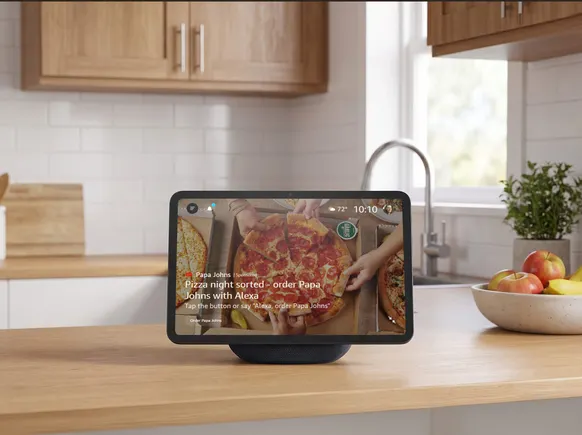
Cannes, Lyon - At this year's Cannes Lions International Festival of Creativity, if you asked attendees what topic was on their minds most, the answer would likely be "artificial intelligence." This is partly due to some notable new entrants at this year's festival, but almost every platform and publisher is eager to prove that their investments in this field, including agentic AI, are moving from hype to reality.
Amazon this week launched a new ad format, Alexa+ Agentic Ads, highlighting its focus on using AI to deliver more tangible results for brands. Customers who see the ads can initiate voice chats, compare different purchasing options, and complete transactions without leaving the Alexa interface.
In a demo shown by Amazon, a woman wanting to buy Jill Scott concert tickets refined her search results by explaining that the occasion was her mother's birthday and that she was willing to pay more for premium seats. She ultimately found front-row seats on Ticketmaster through voice commands.
Papa Johns and The Orchard, a subsidiary of Sony Music Entertainment, are early partners for Alexa+ Agentic Ads, which is currently in beta testing on Amazon Echo Show devices. Alexa+ opened to the U.S. public earlier this year after a testing period in 2025. Late last year, Amazon confirmed to TechCrunch that more than one million people had access to the generative AI assistant. According to information shared by Amazon, Alexa is used in tens of millions of households.
Amazon also plans to bring the format to Fire TV, where it will appear in the carousel-like Feature Rotator experience on the home screen. Although the testing phase is still early, executives emphasized that they do not view Alexa+ Agentic Ads as a limited experiment or theoretical use case.
"We already have ad products live. This is not something we're talking about or saying 'we're working on it,'" said Charlotte Maines, Amazon's vice president of devices content and advertising, in an interview on Wednesday.
According to Maines, Alexa+ Agentic Ads does not require strict phrases to recognize when to perform actions and can capture more subtle cues. Amazon believes the conversational nature of the technology is a way to ultimately achieve more personalized and relevant advertising, echoing what other AI platforms see as their value to brands. With Papa Johns, for example, Alexa might remember toppings a customer preferred in previous conversations and present them as recommendations when reordering.
"This is really the first thing of more innovation opportunities because Alexa+ - like all these agentic AI assistants - is brand new," Maines said. "My job is to make sure that as customer engagement grows, advertisers can participate in these high-intent conversations."
Leveraging Amazon's tech stack advantages
Cannes Lions may make the AI space seem crowded, but Amazon believes it has an edge over newcomers thanks to the assets that helped its advertising division grow into a $70 billion engine. These assets include a robust demand-side platform, mature measurement capabilities, and rich transaction-level data.
"We have an incredible Amazon Ads tech stack and infrastructure business, which puts us in a very strong position to quickly bring things to the DSP, for example, or offer self-service, programmatic offerings," Maines said.
Amazon is also combining its new agentic products with a broader suite of automation tools, including creative agents that help advertisers develop, create, and deploy campaigns on the platform.
"(Advertisers) can decide based on their creative team's preferences whether to be involved or not when generating these assets, but we... provide a plug-and-play solution," Maines said. "We do have that foundation, so we're able to provide a lot of data on creative performance history."
The meandering and more private nature of consumer conversations with AI chatbots raises potential privacy concerns as the channel intersects more with advertising. OpenAI, for example, has pledged not to share conversation information with advertisers in an effort to maintain user trust.
Maines described a use case where she lost her young son's water bottle, and Alexa promptly offered replacement recommendations - some of which were sponsored content - while remembering his age group and preferred color, orange. This level of customization is made possible through information shared with the AI, but Maines said there is a "firewall" when it comes to the ad tech stack. She explained that privacy is another area where Amazon's longer history in advertising may provide an advantage amid the AI boom.
"We use that information to build better first-party models, but it doesn't change how we interact with advertisers, how we use data to serve you the best ads," Maines said. "We're fortunate to have decades of building products that both create highly personalized and relevant experiences and do so in a way that's privacy-safe for customers."
Editor's note: This article has been updated with information Amazon provided after publication regarding its Alexa user base.