
LiveRamp CEO on OpenAI Partnership and Upcoming Publicis Acquisition
Data collaboration platform LiveRamp has been active recently, including reaching a measurement partnership with OpenAI and planning to be acquired by Publicis Groupe for $2.2 billion. At the 2026 Cannes Lions International Festival of Creativity, company CEO Scott Howe was interviewed on these hot topics, elaborating on the company's positioning in the AI advertising era, a new partnership with Adobe, and a commitment to maintaining platform neutrality after the acquisition.
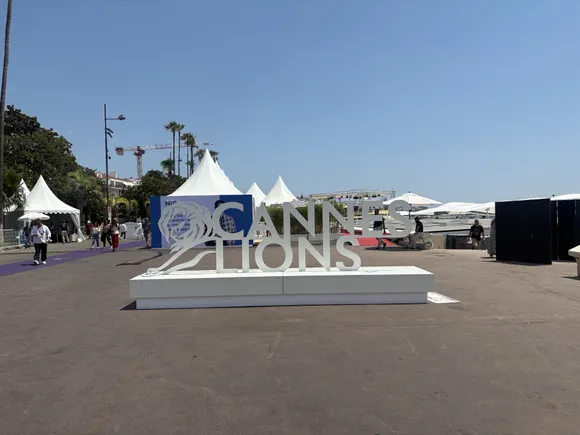
CANNES, France — LiveRamp has had a busy start to 2026, including an acquisition that has sparked industry-wide discussion. Several major moves by the data collaboration platform — a measurement partnership with OpenAI and its planned acquisition by Publicis Groupe for $2.2 billion — were back in the spotlight this week at the Cannes Lions International Festival of Creativity.
The ad tech company's heightened visibility in Cannes aligns with broader industry trends: a festival centered on celebrating creativity is increasingly leaning toward data-driven marketing and technology, with the recent AI boom adding strong momentum to these areas.
"Suddenly, we're the nerd that became popular," LiveRamp CEO Scott Howe said in an interview.
Continuing this tech theme, LiveRamp announced a new partnership with Adobe on Tuesday, expanding its footprint further into creative production. LiveRamp will provide shopper data to Adobe's GenStudio for commerce media networks and combine this data with Adobe's Real-Time CDP Collaboration capabilities. This means commerce media advertisers will no longer need to rely on modeled audiences to guide their AI-generated creative; instead, they can leverage real transaction-level insights to support personalization at scale.
"For the first time, people can not only optimize audiences but also optimize creative down to a very granular level," Howe said. "You can run against countless creative permutations and pinpoint exactly which combinations actually work."
Collaboration is core
A central focus for LiveRamp is identifying platforms that are beginning to run ads but need to fill gaps in measurement and data activation — what Howe calls "destinations." These platforms don't need to build their own tech stack from scratch.
In recent years, this initiative has involved partnerships with emerging social apps like TikTok and connected TV and streaming platforms like Netflix. As more channels such as search and shopping are being rebuilt around chatbots, the rise of AI advertising naturally becomes an extension of this work.
"If data is being used to make (chatbot) communications more effective and content more effective, then shouldn't data also be used to determine whether that content is relevant to users? Absolutely," Howe said.
LiveRamp's team exploring these new destinations is led by Travis Clinger, Chief Connectivity and Ecosystem Officer. The team began reaching out to OpenAI frequently around the time ChatGPT ads launched earlier this year, and the ChatGPT developer quickly realized they had much in common.
LiveRamp initially will help ChatGPT advertisers use its Conversions API Hub to extend measurement beyond cookie-based tracking, while already positioning itself as a long-term partner in OpenAI's advertising journey. OpenAI made its first major appearance at Cannes Lions this year, serving as both a test of the advertising appeal of a platform only four months old and a push for rapid expansion as more companies begin questioning the soaring costs of AI development.
"This company is at the forefront, saying... we want to prove that ROI is justified. I think that's very smart," Howe said of OpenAI. "It's the best starting point. From day one, we can say, 'Hey, we think this works, but don't take our word for it. Look at your own results.'"
Views on the Publicis acquisition
When the Publicis deal was announced in May, Howe said it would unlock "greater resources and flexibility to scale our business." On the resources front, the CEO hopes to leverage Publicis's global scale to break into international markets that currently account for only about 5% of LiveRamp's revenue.
"Look at my customer base — it's almost entirely global," Howe said, citing marketers like Procter & Gamble and Coca-Cola. "Honestly, I've probably let them down over the past decade because I haven't moved fast enough in these global markets."
Flexibility is a trickier topic. Publicis says it's acquiring LiveRamp to accelerate its agentic AI efforts, and the platform it's taking over has long been known for its collaboration capabilities. Skeptics have already warned that the deal will ultimately benefit Publicis and could harm LiveRamp's reputation as a neutral connector between advertisers, platforms, and publishers.
Howe acknowledged some agency concerns but stressed that maintaining an open mindset will continue to be LiveRamp's mission. The CEO added that most of LiveRamp's customers are excited and curious about the deal, which is expected to close by year-end. He hinted that the harshest criticism mostly comes from biased competitors who smell an opportunity to grab market share and business from LiveRamp.
"Whatever (agencies) need in terms of assurances that we will remain neutral — we certainly will," Howe said. "Our entire value has always been in working collaboratively with all parties in the industry."
Despite Howe's promises of neutrality, some agencies don't seem convinced. WPP, Publicis's main competitor, plans to stop using LiveRamp once the acquisition closes, its CEO Cindy Rose told Campaign later on Monday in a discussion in Cannes. LiveRamp declined to comment on the news.