
Heinz Leverages World Cup Social Marketing to 'Show Its Cards' with Small Packets of Condiments
Heinz launched a social-first marketing campaign during the World Cup quarterfinals, responding to long-standing consumer complaints about insufficient condiment packet portions with oversized 'penalty card packaging,' while continuing its 'Irrational Love' brand platform.
Quick overview:
- Heinz launched a social-first marketing campaign during the World Cup quarterfinals, showing a "red card" to bland food. The information was shared with Marketing Dive by the brand.
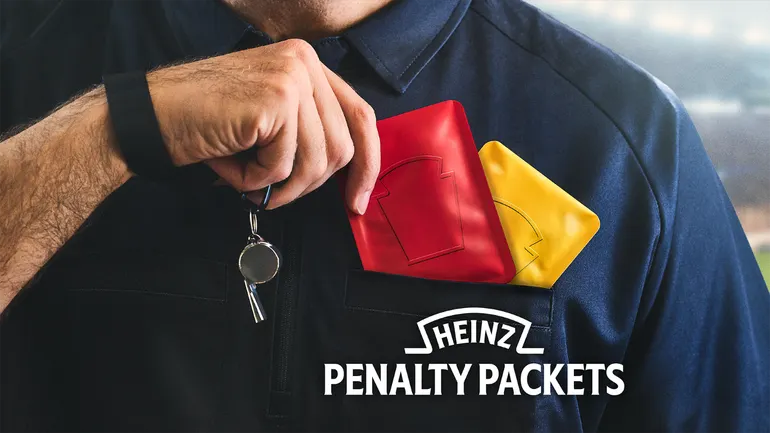
- The campaign's core product is "Penalty Packets"—an oversized condiment packet with double the standard amount of ketchup and mustard. The packaging is designed to resemble yellow and red cards in soccer, and the colors of these iconic penalty cards happen to match Heinz's condiment colors.
- The campaign was created by The Kitchen, Heinz's in-house creative agency, and covers user-generated content, social videos, and creator content. This initiative is an extension of the brand's "Irrational Love" brand platform, launched in 2023 to unify its global creative strategy.
Deep dive:
To keep Heinz relevant in the final weeks of the World Cup, the brand launched this new social-first campaign, which combines well-known symbols from soccer culture and addresses a long-standing consumer complaint—there's never enough sauce in condiment packets.
This summer's World Cup has seen a record number of red cards issued by referees. As of July 5, 13 red cards had been shown, surpassing the total of the 2018 (4) and 2022 (4) tournaments combined. Red cards apply to a range of violations from unsportsmanlike conduct to serious fouls; yellow cards are used as warnings for lesser offenses, and two yellows equal a red.
The Kraft Heinz Company has invested significantly in sports marketing in recent months, focusing on growing its "Away From Home" foodservice business. In March, the company entered a five-year partnership with the NFL, becoming the league's first official condiment partner.
The World Cup campaign kicks off with a social video showing a series of un-sauced foods, such as burgers and hot dogs. Consumers then hold out red or yellow packets to the food, like a referee showing a card to a fouling player, before squeezing the mustard or ketchup directly onto the meal. The video ends by encouraging consumers to post content on social media using the hashtag #PenaltyPackets.
"In the world's highest-stakes tournament, red and yellow mean foul. We wanted to flip that meaning, and Heinz Penalty Packets do just that. They're the first-ever condiment packets that let fans call a penalty on 'no flavor' and solve it instantly with more Heinz," said Simon Au, Executive Creative Director at The Kitchen, in a press release.
The packets will be available for a limited time via a microsite. Each box costs $1.57—a nod to the "57" on the Heinz bottle—and contains one red and one yellow large packet, plus several regular-sized packets as "substitutions," a common soccer term for player changes.
This campaign is expected to help the brand tap into on-field discussions around red and yellow cards. Recently, U.S. forward Folarin Balogun's red card sparked widespread controversy. He was supposed to miss the match against Belgium, but after the White House pushed for a review, his suspension was overturned and he was allowed to play.
Although not an official sponsor, Heinz has found various ways to maintain a presence during the World Cup. Under FIFA's "clean stadium" policy, venues must cover or rename brands not associated with the event. This led to images circulating online of Heinz condiment bottles covered with tape. Heinz Canada seized the moment, posting an image of its own bottle with a covered label, calling itself "unofficial stadium ketchup."