
Kraft Heinz adds nearly $100 million in marketing investment to accelerate business recovery
Kraft Heinz announced in its Q2 2026 earnings report that it will add nearly $100 million to its business recovery plan, with a focus on marketing. The company expects marketing spending in 2026 to account for at least 6% of net sales, up 0.5 percentage points from before. CEO Steven Cahillane said the new investment has already shown results across multiple categories, and the Heinz brand has resumed strong growth.
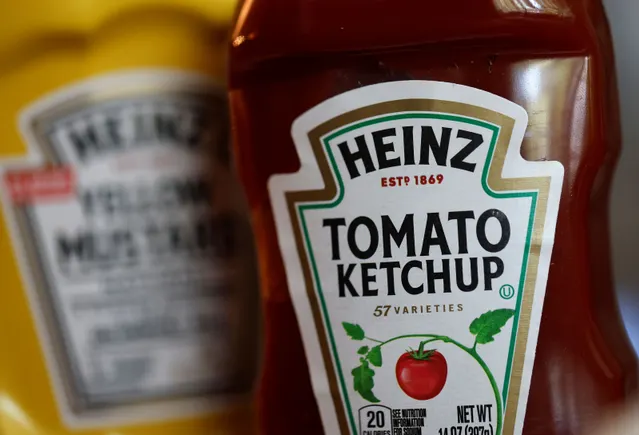
Kraft Heinz announced in its Q2 2026 earnings report that it will invest an additional approximately $100 million in its business recovery plan, with most of the funds focused on marketing. The company said in pre-prepared remarks that marketing spending in 2026 will account for at least 6% of net sales, up 0.5 percentage points from its previous target.
The move follows the packaged food giant "beating expectations" in the first half of 2026. During the first half, the company had already begun deploying $600 million in incremental spending across areas such as product superiority, pricing, marketing, sales, and R&D.
"I see this investment working in almost every area where we deploy it. Condiments is probably the first area where we're seeing significant improvement," said Kraft Heinz CEO Steven Cahillane on the earnings call, responding to an analyst's question about the effectiveness of increased investment. "Heinz has returned to growth, and strong growth—strong consumer growth—which is fantastic. Overall, in the U.S. market, we're seeing better performance."
Key data at a glance
- $100 million:The additional investment Kraft Heinz is adding to its business recovery plan, with most of it focused on marketing.
- 6%:The expected share of Kraft Heinz's net sales that marketing spending will account for in 2026.
- 1.4%:The year-over-year decline in Kraft Heinz's net sales for the second quarter of 2026.
The company, which owns brands such as Philadelphia cream cheese, Jell-O pudding, and Ore-Ida potato products, has been directing funds to fewer but more impactful media partners during its recovery. This strategy has recently been reflected in several major sponsorships, including a five-year partnership with the NFL, marketing efforts around the celebration of America's 250th anniversary (America250), and a long-term strategic marketing partnership with The Walt Disney Company covering Disney's media channels, cruise line, theme parks, and various events.
"We're not only increasing brand support investment, but we're spending more efficiently. We're reallocating funds to higher-return brand media, improving efficiency by reducing the number of partners and increasing their quality, and launching more consumer-driven creative content," Cahillane said in the presentation. "Importantly, we're measuring direct sales impact and seeing clear improvement."
Brand-specific marketing campaigns are also helping to strengthen brand equity and build "growth momentum" in the U.S. market. Examples include Heinz's "It Has to be Heinz" campaign and Philadelphia's "Really Philly Good" campaign—the latter positioning cream cheese as an essential kitchen ingredient. Kraft Heinz also said that increases in headcount have been primarily directed toward marketing and sales roles.
Kraft Heinz suspended its plan to split into two companies in February 2026, believing its problems were fixable. In the second quarter ended June 27, net sales fell 1.4% to $6.3 billion, while sales in its largest market, North America, declined 2.7%. Despite this, results still beat internal expectations and were above analyst estimates. Kraft Heinz raised its full-year organic net sales outlook, now expecting a decline of 0.5% to 2%, compared with its previous forecast of a 1.5% to 3.5% decline.