
Litter-Robot's First Chief Marketing Officer: Driving Growth in the Cat Owner Market Through Marketing
After Whisker appointed its first CMO, Hew Loyd, the company launched the 'The Future is Feline' initiative, aiming to position cats as ideal companions and expand the market through the Litter-Robot product line and subscription services. In an interview, Loyd discussed topics such as brand positioning, marketing strategies for high-priced products, handling the topic of pet waste, and technology-driven growth.
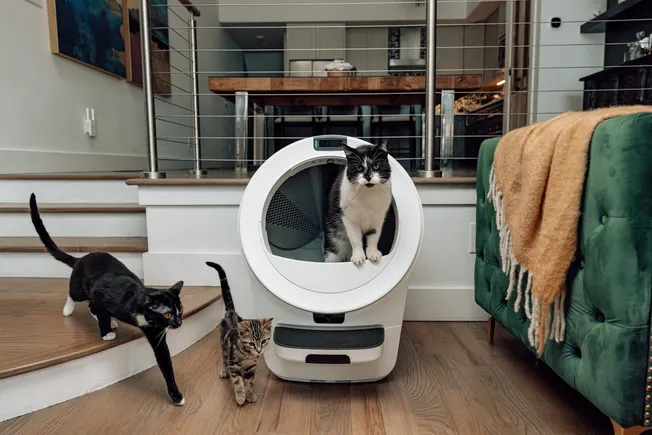
Whisker, the company known for its self-cleaning litter boxes, is working to cultivate more "cat people" through a new marketing push centered on its Litter-Robot brand. The 25-year-old company, whose marketing has historically focused on eliminating the chore of scooping litter, is undergoing a transformation as it seeks to blur the lines between a tech company and a pet company.
The shift stems from the company's appointment of its first chief marketing officer last fall: Hew Loyd, who previously served as CMO of CookUnity and Sir Kensington's. Loyd is now spearheading a new brand initiative called "The Future is Feline." The initiative aims to position cats as ideal companions and promote Whisker's app and Whisker+ subscription service, which unlocks a range of new features for users of certain Litter-Robot products.
Whisker is also rolling out new models to reach a broader range of consumers, including the Litter-Robot 5 and 5 Pro, which use artificial intelligence and cameras to provide more insights into pets. The Litter-Robot EVO is a more compact version aimed at apartment dwellers and those with smaller spaces.
These moves come as cat ownership continues to rise, with the number of cat-owning households growing 23% to 49 million in 2024, according to the American Pet Products Association (APPA), creating an opportunity for the company to build relationships with a new wave of customers.

Marketing Dive spoke with Loyd about his first few months on the job, the company's latest marketing efforts, and the future of pet ownership.
This interview has been edited for clarity and brevity.
Marketing Dive: What changes have you made since becoming CMO?
Hew Loyd:The foundation here is very solid. What's most exciting and what drew me to this role is that Whisker has been around for 25 years, so it's certainly not a "startup," but it has experienced incredible accelerated growth over the past 8 to 10 years, which I attribute to a variety of factors. Our CEO has really led a new wave of growth in the business, and that's very exciting.
Given the broader landscape right now, from a performance standpoint, we have a fantastic opportunity. The big opportunity now is to build a brand that leads with great storytelling to leverage the power of its products and audience. I feel Whisker has done that exceptionally well, and now it's time to take it to the next level.
One area that needed more work at the outset was creating the next layer of platform purpose at the highest level. So we launched "The Future is Feline" initiative. We also built a multi-touch attribution model to be more precise in our measurement, truly understand incrementality in the business, and optimize unit economics.
The last area, which isn't entirely new or revolutionary for us, is building an extremely powerful advertising production system. We call it "Sprints," which is essentially our commitment to bringing together a lean team of creatives to address the insatiable appetite for volume and speed from paid social engines. How do we not only connect better with consumers, but do it at scale? We've also put a lot of effort into that.
This is your first role at a pet brand. Do you consider Whisker a pet product company because it sells litter, mats, deodorizers, and other pet supplies, or is it more of a tech company? Is it more like Apple or Friskies?
To date, our business is still primarily selling the Litter-Robot, which is a connected device. That connected device is very much like a tech product. You can look at this business the way you look at other connected home products in your life, like a Peloton. How this business leverages the app experience and the functional use of the hardware—to me, it fits very neatly into a category of products that operate in a similar way. That might differentiate us from classic pet products, pet food, or other things that are more in the traditional CPG space.
How do you get consumers to move from a traditional litter box, which typically costs just a few dollars, to a brand that costs $599 or more, with bundles that can exceed $1,000?
I think the challenge for a company like ours is that ultimately we have to completely change the customer's worldview. Of course, there are many very inexpensive versions on the market that everyone can afford. We're glad there are various solutions available so more people can have cats. But we also know that in many areas of life, there are simple, cheap, or even free options, and we choose the more advanced version because it brings more benefits. We believe we have improved the daily scooping experience tenfold or even a hundredfold.
We want more people in the world to want to have cats. We think one of the biggest barriers is the litter box—not just the chore itself, but also the odor and the time. It gives people the opportunity to readjust their relationship with this family member who needs help. So we're very confident about that.
Pet waste can be a taboo topic. How does Litter-Robot handle that in its marketing?
I've always been drawn to categories that can take something mundane or even potentially taboo, reprocess it, remove the shame, and give people a sense of community and openness. We think talking about it is liberating, and of course, there's a lot of humor in it too. Who doesn't like a good poop joke? The brand has also leaned into that in the past.
Over time, we've grown and deepened that message a bit. "The Future is Feline" is centered on the idea that we believe cats are superior companions, even though we live in a dog-centric society, and the Litter-Robot makes your relationship with your cat smoother, thereby lowering the barrier for more people to adopt cats.
One of the arguments for why cats are a great choice is that with the Litter-Robot, we almost completely remove the concept of "poop." When you have a dog, poop is really a part of life, and there's no Litter-Robot to save you.
Given the construction and price of the Litter-Robot, consumers typically use it for years. Once the market becomes saturated, how important is the tech side to growth?
That's exactly where the future of our business lies. Whisker+ and the broader connectivity of hardware and software can better diagnose the challenges cat owners face. We'll tell you things about your cat that you don't know. We want to use the Litter-Robot as an entry point where a cat enters an environment and gets a bit of a health check. It has a scale that can monitor the cat at the most basic level. And the Litter-Robot 5 and 5 Pro also have facial recognition for multi-cat households.
If your cat goes in and out of the litter box 10 to 15 times a day, what does that mean? It could be a urinary tract infection, which is dangerous. Without the Litter-Robot, using a traditional litter box, you might be at work and never know. I wouldn't call it a diagnostic tool, but our core direction is to provide cat owners with a clearer, more advanced view every day.
There are 49 million cat-owning households in the U.S., and only about 3 million of them use automatic litter boxes. So looking at the gap between 3 million and 49 million, you can see where we're headed—there are still many cat owners without this solution. We'll be working on that for a long time.
"The Future is Feline" is precisely about addressing this challenge: there are many biases against cats in our society. People give up on having cats because of some of the problems we're solving. Through this initiative, we hope to push the number of 49 million cat-owning households even higher.