
Data/Analytics

Third-party generative AI tools outperform brand-owned chatbots in customer service
A Gartner survey of more than 3,500 B2B and B2C customers found that customers are three times more likely to use third-party generative AI tools for customer service than brand-owned chatbots. Over the past year, usage of third-party generative AI has doubled, while brand chatbot usage has shown no statistical growth since 2022. Analysts point out that brands need to rethink their AI customer service strategies, focusing on action support and presentation.

The Era of AI Visibility: Why Earned Media Becomes a Key Driver
AI search is reshaping the rules of brand visibility: 37% of consumers have turned to AI tools to start searches, and 60% of searches end with zero clicks. In this context, earned media (such as publisher coverage and community discussions) has become a key signal of trust for AI systems, surpassing traditional paid media in importance. Based on research by Mediassociates, this article analyzes the new logic of media planning in the AI era and proposes actionable strategic adjustments.

Marketing Data Mid-Year Review: Key Indicators for H1 2026
In the first half of 2026, the marketing industry seeks balance amid AI investment pressure, slight budget increases, and rising costs. Data shows that marketing budgets as a percentage of revenue fell to 7.8%, with AI investment accounting for 15.3%; creator recommendations drove 67% of consumer purchases, sports event viewership generally saw double-digit growth, and CTV advertising share reached 47.5%.

How Brands Can Improve Their Visibility in AI Search Summaries
According to research shared by LQ Digital with Marketing Dive, over 40% of brand mentions in organic search results do not appear in AI search summaries, while 28% of brands cited by AI do not appear in organic results. YouTube videos appear 4.3 times more often in AI summaries than in organic search, while Reddit is cited 3.9 times more frequently in organic search than in AI. Query phrasing affects brand presentation, with category queries more likely to produce brand results.

Americans' definition of success is changing, and brands need to keep up
Simon-Kucher's study of 5,000 Americans shows that younger generations still identify with the American Dream, but the definition of success has shifted from traditional milestones to daily well-being, flexibility, and quality of life. Brands need to reassess their value propositions.

In the AI Era, Why Data Accuracy Matters More Than Data Scale
As AI and automation become increasingly central to marketing, the issue of data accuracy can no longer be ignored. This article points out that the era of competing on scale is over; the true competitive advantage lies in data accuracy, validation, and usability, and proposes a new direction for the industry toward data trustworthiness.
Consumers Worry About Economic Recession, How Should Brands Respond?
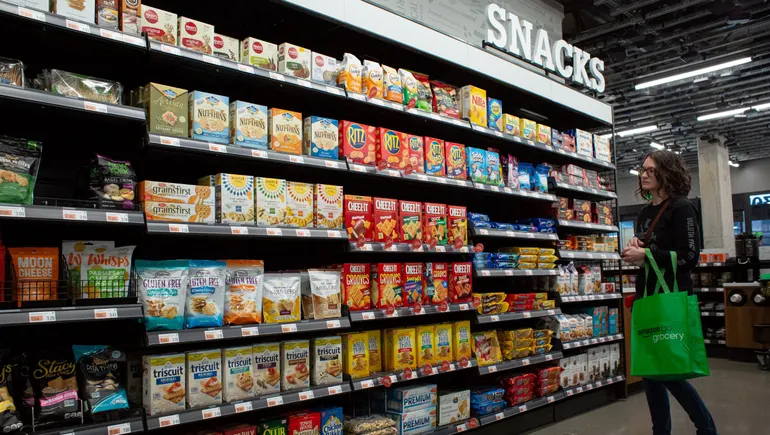
The latest consumer sentiment survey from EY-Parthenon shows that nearly two-thirds of U.S. consumers believe a recession is likely, with financial confidence down 12% from six months ago. Consumers are adjusting budgets and reducing discretionary spending, making competition among brands more intense. Experts suggest that brands should focus on existing customers, reactivate dormant customers, and win the market through authentic value delivery.

AI Disclosure Labels Do Not Affect Ad Performance: What the Data Says
With the widespread use of AI in advertising creativity, regulatory bodies in various countries have successively introduced AI disclosure requirements. Research conducted by MediaScience in collaboration with MediaPet and the Ehrenberg-Bass Institute shows that AI disclosure labels do not have a negative impact on ad performance. The study tested four labeling methods and found that continuous text labels performed best in AI recognition rate (49%), while the AI icon method, although preferred by consumers, had the worst actual recognition effect (38%).
Gartner: AI Boom Drives Accelerated Growth in Customer Acquisition Media Spending
Gartner's CMO spending survey shows that in 2026, 62.6% of media spending will go toward customer conversion and awareness, up 10% from 2024; labor costs will account for 24.5% of marketing budgets, up from 21.9% in 2025. Spending on loyalty and retention will account for less than 15%, down 29% from the same period. The survey also finds that under pressure from AI adoption, digital channel spending is increasing, but an excessive focus on short-term optimization may harm AI readiness.

AI Reshapes Consumer Connections, Marketers Need to Reassess Loyalty Strategies
New research from Gale agency indicates that with the proliferation of AI tools like ChatGPT and Gemini, consumers are delegating brand preference settings to chatbots and even entrusting AI agents with shopping. 56% of respondents have accepted fully communicating with brands through AI, and nearly one-third have instructed AI assistants to prioritize specific brands. The report warns that brand loyalty faces the impact of 'AI disintermediation,' and marketers need to strengthen community insights, optimize experiences, and continuously invest in loyalty programs.