
AI Reshapes Consumer Connections, Marketers Need to Reassess Loyalty Strategies
New research from Gale agency indicates that with the proliferation of AI tools like ChatGPT and Gemini, consumers are delegating brand preference settings to chatbots and even entrusting AI agents with shopping. 56% of respondents have accepted fully communicating with brands through AI, and nearly one-third have instructed AI assistants to prioritize specific brands. The report warns that brand loyalty faces the impact of 'AI disintermediation,' and marketers need to strengthen community insights, optimize experiences, and continuously invest in loyalty programs.
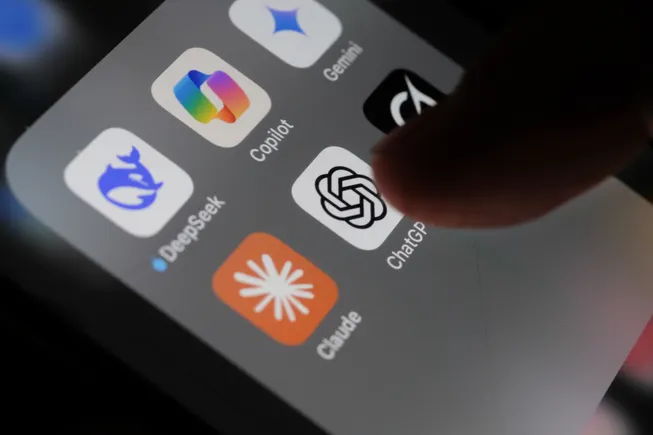
With the proliferation of AI tools like OpenAI's ChatGPT and Google Gemini, more and more consumers are setting brand preferences within chatbots. In the grand vision of technology developers, agentic AI will ultimately be able to identify relevant products, search online, and even make purchases directly, requiring minimal direct input from users. Recent research from the Gale agency shows that this trend poses a significant challenge to the building and maintaining of brand loyalty.
The AI shift means marketers need to listen more closely to community voices while providing as frictionless an experience as possible to avoid losing fickle customers. The survey shows that 56% of surveyed consumers have already accepted handing over all brand communication to AI, and nearly a third have instructed AI assistants to prioritize certain brands.
"This is quite alarming," said Gale CEO Andrew Noel. "They are saying, 'I am willing to trust a large language model to be the filter between me and brands.'"
Gale's report, titled "The Preference Economy," paints a picture of a growing group of AI-savvy consumers who rely on AI to construct their entire commercial reality, raising existential questions about the role of marketing and loyalty. About a quarter of respondents said they would regularly set brand preferences through AI within the next year, but the potential addressable market for what Gale calls "AI-native loyalty" could expand rapidly astechnology becomes increasingly prevalent.
"In the next two to three years, you might see 60% to 70% of people instructing large language models to set their preferences, meaning I only want to communicate with these four or five brands because I prefer them," Noel said. "If you are a brand, considering the technological impact, I think you have a lot to think about."
High Expectations
AI's "disintermediation" issue exacerbates an already turbulent loyalty market, including widespread apathy. Gale data shows that the average consumer joins four to six loyalty programs, but a significant portion are not actively engaged, becoming "ghost members." Gale's research surveyed 3,000 consumers in the US and UK.
Millennials and Gen Z are the most actively engaged groups in loyalty programs, but they are also the most discerning. Young consumers value seamless experiences and quickly switch to competitors when brands fail to meet expectations. Among those aged 25 to 34, 61% have abandoned a brand because a competitor offered a better loyalty experience, even if the competitor's actual rewards were worse.
"Millennials and Gen Z really have high expectations when interacting with brands," Noel said.
Gen Z and millennials also happen to bethe leading groups in AI adoption, but the AI challenge is not limited to specific age groups. Among all of Gale's respondents, including non-AI users, 47% trust AI as a method for starting brand and product research, and 16% said they would adopt AI recommendations without further discussion. About a quarter of respondents accept AI learning their brand preferences, while 20% feel the same about cookies and 17% about social media. Privacy concerns are more common among older consumers, while 27% of those aged 25 to 34 are not worried at all.
"Among the youngest respondents, the most common response was not hesitation or resistance, but that they simply hadn't thought about it yet," the Gale report states.
The Way Forward
The need to stand out in an increasingly automated world may prompt marketers to once again prioritize first-party data, continuing the trend that began with the decline of cookies in the early 2020s. Gale believes that gaining more direct insight into customer behavior patterns will enable brands to better inform AI systems.
"Most CMOs today would say, we sit on a treasure trove of data but lack insights," Noel said.
Strategies for adapting to the AI economy vary by category—fast-food chains and large retailers require different approaches—but Noel points out that understanding community is a key differentiator. This could mean strengthening social listening on chat apps like Discord to identify emerging trends in communities, or for businesses with large physical stores, investing in traditional strategies like surveying shoppers in the aisles.
Using these insights to guide personalization efforts will help maintain brand relevance while AI takes over other aspects of the loyalty pipeline. Gale's previous researchshowed that nearly 70% of consumersare more likely to join loyalty programs with active communities, and 30% feel a stronger emotional connection to brands due to the social aspects of loyalty offerings.
"You have to be very focused on... the community management side. How do you truly make people feel known and valued by the brand?" Noel said.
During a period when marketing budgets are generally under pressure due to macroeconomic fluctuations andmore consumers are trading down, another consideration is maintaining investment in loyalty programs. Too many marketers view loyalty as a one-time discount program, while AI is reinforcing the need for dynamism.
"Just like media budgets, continuous investment in the experience, mechanics, and technology that support loyalty is a project I encourage brands to seriously consider," Noel said.