
First Half of 2022: How Seven Major Marketing Campaigns Broke Through the Turmoil
In the first half of 2022, brand marketing faced multiple pressures including the aftermath of the pandemic, economic fluctuations, and fragmented consumer attention. Nevertheless, many brands successfully broke through by cleverly integrating pop culture, innovative technological applications, inclusive narratives, and sustainable practices. This article selects seven representative marketing campaigns and analyzes their strategies and effectiveness.
As 2022 began, the ongoing pandemic, social and political economic turmoil intertwined, making consumers' daily lives difficult, and brand marketers faced unprecedented challenges. Although global advertising revenue is expected to grow this year—despite macroeconomic uncertainty and the war in Ukraine—marketers seem to find it harder than in the previous two years to create campaigns that break through the noise and connect with distracted, ad-weary consumers. In addition to delivering the humor and joy consumers desperately crave, marketers need to pay attention to the increasingly tightening data privacy environment and explore precise targeting and performance measurement on platforms such as connected TV.
Much attention has focused on how marketers are shifting their bets from non-fungible tokens (NFTs) to broader metaverse experiments—a still-evolving fusion of the physical and digital worlds. Brands in almost every vertical are striving to establish a presence in emerging sandboxes or established gaming platforms. The speed and frequency of activations suggest that marketing in a hypothetical world is currently easier than in the real world.
Each year, Marketing Dive compiles the most impactful and significant marketing campaigns from the first half of the year. The selected cases below showcase how great brands navigated this turbulent year: connecting with pop culture remains a key priority, as does innovative use of mobile technology; although purpose-driven marketing seems to have taken a backseat, several campaigns blazed new paths in sustainability and inclusivity—whether through experiential or esports activations; most importantly, some marketers cleverly conveyed messages to consumers about the changing world, helping them understand how to live in the new reality.
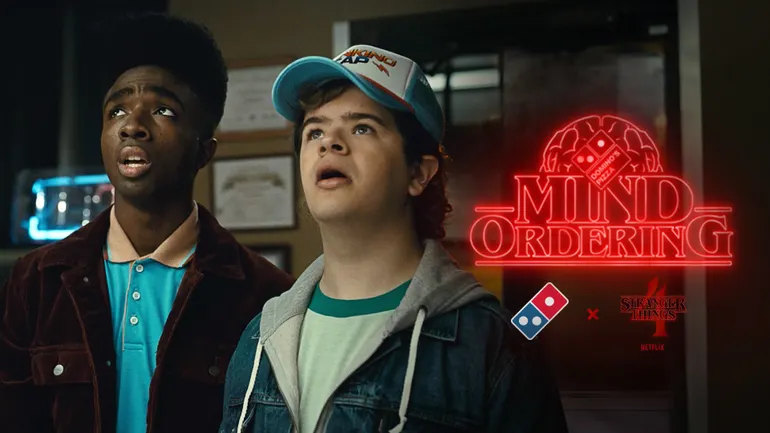
Domino's 'Mind Ordering' Marketing with Stranger Things
As brands continue to make pop culture connections a top priority, Domino's boldly teamed up with Stranger Things—the streaming hit whose fourth season broke Netflix viewing records. The chain's 'Mind Ordering' app used facial recognition and eye-tracking technology to let consumers order pizza with expressions and head movements, while giving fans the chance to interact within the show's universe.
The campaign also included a video featuring Stranger Things stars. Domino's investment allowed it to surpass the show's many previous brand integrations.
"This whole experience is not just 'move your head to order pizza.' It's a deeper experience and also a narrative tool, and I think it was used very well," said Dmitrii Osipovskii, interactive creative director at agency PPK, praising the campaign for achieving 'intimacy at scale.'
Domino's often describes itself as a tech company that happens to deliver pizza. Cleverly combining cultural play with emerging mobile technology testing, this was indeed an experiment that even Hawkins National Laboratory in the show would appreciate.
Heineken Tackles Blurred Work-Life Boundaries
As the pandemic showed signs of approaching an endemic phase, some brands focused on the pain points of the 'new normal,' and Heineken's case stood out by combining practicality, empathy, and optimism.
To address the growing work-life imbalance, Heineken launched a campaign around The Closer—a Bluetooth device that automatically closes work apps when the user opens a beer. Beyond the device itself (available in limited quantities for just one hour), the campaign included a high-quality film and a satirical collaboration with comedian Billy Eichner. Overall, The Closer demonstrated how a brand like Heineken can market around the new realities facing white-collar target audiences while reinforcing its premium positioning.
"For a global brand like Heineken, creating a global creative that doesn't feel mediocre is difficult. The brand has consistently excelled at incorporating current consumer truths into optimistic work. 'The Closer' is another strong piece in that journey," said James Denman, head of innovation and marketing at Yard NYC. "What I love about this idea is that it connects pandemic-accelerated behavior to a truth that is both fascinating and practical for consumers."
Tampax and Always Bring Inclusivity to Esports
As gaming and esports further enter the mainstream, non-endemic brands are increasing their marketing investment in the industry—which generates more revenue than music, movies, and television combined. For many brands, this means moving beyond the traditional image of 'young men looking for energy drinks and body wash,' as nearly half of gamers are women (according to Entertainment Software Association research).
Tampax and Always launched a sponsorship in June targeting the shooter game Valorant, partnering with esports organization Gen.G and Galorants (the largest community of female and non-binary Valorant players). Together, they hosted an in-person tournament to support underserved groups in the gaming world. Through ambassador-led programming and a charitable component, the campaign allowed the P&G brands to extend their purpose-driven mission into new territory.
"This is a great way to put brand purpose into practice, strategically continuing the same empowerment journey while staying timely and relevant to what people care about right now," said Fernanda Bürgel, creative director at agency PeterMayer.
Furthermore, the campaign elevated Tampax and Always marketing beyond stereotypical, outdated portrayals of the category. "That flashy, pink marketing for women's products no longer works; it has to be authentic," said Ruth Bernstein, co-founder and CEO of Yard NYC.
Coca-Cola Creations Platform Keeps Up with Trends
What is 'cool' is constantly evolving, but Coca-Cola may have found the secret to staying engaged in the conversation—the Creations platform launched in February. As part of the 'Real Magic' brand platform established last year, Creations introduces limited-edition Coke flavors tied to current trends and cultural drivers.
The first flavor, Starlight, was inspired by the resurgence of interest in space travel driven by companies like SpaceX, and even paid homage to Coca-Cola's space debut in the 1980s. Its flavor was designed to reflect interstellar travel, and the packaging featured a QR code that unlocked an augmented reality (AR) concert by pop singer Ava Max.

The second Creations flavor, Zero Sugar Byte, targeted the gaming community and was designed to evoke the taste of pixels—it also had interactive ties to the metaverse. In June, a third flavor was released, a watermelon strawberry soda created in collaboration with Grammy-nominated artist Marshmello.
Creations sparked interest among younger generations while paying homage to Coca-Cola's history, but fell short in other areas, said Lucien Etori, vice president and executive strategy director at R/GA New York: "I think Coca-Cola failed to inject any emotion into the project—it feels frustratingly mechanical, cold, and even artificial," Etori said in an email.
Pepsi Assembles Hip-Hop Superstars for Super Bowl Halftime Show
In an Avengers-like assembly, Pepsi's Super Bowl halftime show featured Dr. Dre bringing together Eminem, Snoop Dogg, Mary J. Blige, and Kendrick Lamar for performances—marking the final time Pepsi sponsored the show after ten consecutive years.
Pepsi's hip-hop celebration was praised by critics and fans alike. However, the highlights of this farewell show went beyond that. The massive pre-event buzz was fueled by the launch of a mobile app that used AR to place fans at the center of the concert. It not only collected first-party data but also leveraged the increasingly fragmented viewing audience—many people chose to watch the Super Bowl on phones or other mobile devices. The second-screen integration was seen by many in the industry as a bold move, though some felt it didn't fully reach its potential.
"The second-screen app Pepsi created was quite polished. But my question is, why spend so much money to build a one-time app?" said Mike Caguin, chief creative officer at Periscope, in an email exchange with Marketing Dive.
Nevertheless, the split-screen activation combined with the superhero-like assembly delivered a memorable and innovative experience for the big game.
Michelob Ultra 'Kicks Off' for Gender Equality
Anheuser-Busch's Michelob Ultra put sports equality at the forefront in the first half of the year. The brewer committed $100 million to women's sports over the next five years and showcased that commitment fully during its Superior Bowl ad slot. In the ad, top athletes including Payton Manning and Jimmy Butler knocked down an ice-cold Michelob Ultra. When the athletes saw Serena Williams appear, all activity stopped as they realized their luck had run out.
This nostalgic, delightful ad stood out not only for its star-studded cast but also for its messaging. As women's sports grow increasingly popular, brands want to participate while demonstrating social responsibility. Michelob Ultra achieved this in a subtle yet effective way.
The light beer, first launched in 2002, has built a brand image of health and vitality through aggressive sports marketing. Ambassadors include Olympic sprinter Usain Bolt and tennis superstar Williams. The strategy has paid off, with Michelob Ultra becoming the third most popular beer in the U.S. in 2019.
Coors Light: Keeping Both Consumers and the Planet 'Cool'
Coors Light ran two environmentally focused campaigns in the first half of the year. Millennials have proven to be a very environmentally conscious group, with one study finding that 73% of this demographic are willing to pay more for products from sustainable or socially responsible brands. Through the Molson Coors brand's Future Mart and Chillboard campaigns, it sought to establish itself as the light beer of choice for this demographic.
To promote its plan to phase out plastic ring packaging, Coors Light opened a plastic-free convenience store showcasing the new cardboard packaging. In another campaign, the company used white paint to cool black rooftops in Miami. Both initiatives echoed the beer's 'Made to Chill' philosophy, creating a seamless connection between its laid-back image and green messaging. The result was authenticity, avoiding any sense of being forced.
"The brand's core is bringing the cool of the Rocky Mountains everywhere, so bringing some cool to Miami's sweltering flat rooftops feels very natural," said Paul Prato, executive creative director at PPK, in an email.