
Rockstar Energy CMO on Turning Latent Brand Value into Market Share
After Celsius Holdings acquired Rockstar Energy from PepsiCo in 2025, it is fully driving the brand's revival. Chief Marketing Officer Rishi Daing points out that Rockstar possesses brand value far exceeding its market share. By reshaping the 'Live Loud' brand image, deepening engagement in music subcultures, and sports sponsorships like NASCAR, the brand aims to attract a new generation of consumers and strengthen its presence in the Eastern and Southern U.S. markets.
Celsius Holdings is setting out to revitalize the Rockstar Energy brand. The brand was acquired by Celsius in 2025 as part of a broader investment partnership with PepsiCo. Rockstar was founded in 2001 and acquired by PepsiCo for $3.85 billion in 2020, but its market share has steadily declined as new entrants and consumers continue to flood into the energy drink category.
At the heart of Rockstar's revival plan is a marketing push led by Rishi Daing. Shortly after the acquisition was completed, Daing wasappointed Chief Marketing Officer, responsible for the entire portfolio. He brings more than two decades of marketing and commercial leadership experience, including over 15 years at PepsiCo, and is currently focused on activating this brand that fills a gap in Celsius's product matrix.
"Everyone is talking about modern energy—I describe it as the second gold rush of energy drinks—but the fact is, about a third of new consumers entering the category still prefer traditional energy drinks," Daing said in an interview with Marketing Dive. "Rockstar is a remarkable brand with a lot of inherent assets. Its brand equity is far higher than its market share."
Celsius Holdings has started the year strong, with record first-quarter revenue of $783 million and a dollar share exceeding 20% in the U.S. energy drink market. With its namesake functional energy drinks and Alani Nu, which targets female consumers, the company continues to execute the strategy that drove itsfull-year 2025 revenue up 85.5% to $2.5 billion.
"Looking ahead to 2026, we remain focused on investing in brands to support growth, including increased marketing spend during the peak summer selling season, while continuing to enhance earnings quality and stability," Chief Financial Officer Jarrod Langhans said on a recent earnings call.
A dual-pronged approach to sports and music marketing
To unlock the brand's potential, Rockstar recently launched a new "Live Loud" brand identity, bringing back yellow as the primary color and returning to its disruptive brand spirit. In its final years under PepsiCo,Rockstar had adopted a simplified look, targeting a broader, more modern consumer base. "Live Loud" reflects the brand's historical positioning centered on traditional energy drink consumers, with a more male-skewing and mass-market appeal.
"We are modernizing its original tone and voice to better resonate with today's 20-year-olds. Our consumers have aged, but we haven't attracted the next generation yet," Daing said. "Using language from 25 years ago, 20 years ago, or even 15 years ago is no longer relevant to today's consumers."
The key to "Live Loud" is not reaching consumers through mainstream culture, but returning to the music and sports subcultures where Rockstar got its start. Unlike many brands that partner with major events like Coachella, Rockstar is focusing on smaller music festivals, often leaning toward hard rock to fit the brand name, including Sick New World in Las Vegas, Sonic Temple Art and Music Festival in Columbus, Ohio, and Kilby Block Party in Salt Lake City. Beyond large events, the brand's music marketing will also extend to regional and local levels.

"We are significantly expanding our field marketing team. We will invest reasonable resources, but we want to find those smaller venues and emerging artists gathering in venues for a thousand people rather than fifty thousand," Daing said.
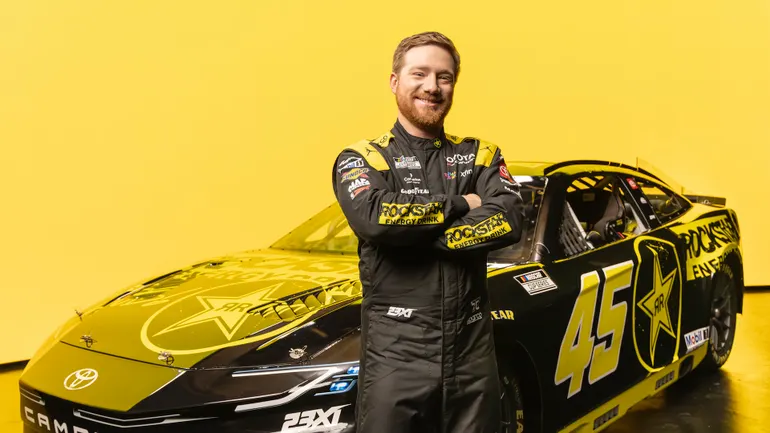
Rockstar is also returning to NASCAR, a sport the brand last sponsored more than a decade ago, and where competitors Red Bull and Monster are currently active. In April of this year, the brand announced a partnership with driver Tyler Reddick, who a month earlier had become the first driver in NASCAR Cup Series history to win the first three races of the season. For Rockstar, NASCAR provides a foothold in regions where its sales have been relatively weak.
Reddick will appear in Rockstar's marketing campaigns, digital content, and on-track integrations. The multi-year partnership also connects the brand to 23XI Racing, the team he drives for. Co-founded by NBA legend Michael Jordan, the team continues to expand its commercial footprint and currently counts Coca-Cola and Monster Energy among its partners as well.
"The West Coast is really our core strength area, but over the past few years, the East Coast has been almost completely lost (for Rockstar)," Daing said. "We know the brand resonates on the East Coast; it just needs more color, more energy, and more relevance. We believe NASCAR—with its massive fan base in the East and South—is a logical choice for a brand like Rockstar."